


Top Stories

Magistrate's Summoning Order Must Reflect Reasons : Supreme Court Reiterates
The Supreme Court today (January 30) quashed a non-speaking summoning order issued by a Judicial Magistrate against a drug manufacturer, reiterating that a summoning order cannot be issued without recording valid reasons. The bench comprising Justice BR Gavai and AG Masih was hearing the appeal filed by drug manufacturers assailing the correctness of the Andhra Pradesh High Court's...
Supreme Court Allows Temporary Allocation Of Fixed Spot For Meat Vendors In Panjim
The Supreme Court recently allowed displaced meat vendors to be allotted fixed spots in a temporary fish market in Panjim, Goa after City Corporation's demolition of the building where the vendors were lessees for over 30 years. The bench of Justice BV Nagarathna and Justice SC Sharma was hearing the challenge to the order of the Bombay High Court which directed the Corporation of the City...
Supreme Court Sets Aside Judgment Allowing Jharkhand Residents Who Cleared CTET/TET From Neighboring States To Apply For 2023 Teacher Recruitment
The Supreme Court set aside a 2023 judgment of the Jharkhand High Court permitting Jharkhand residents who had cleared the Central Teacher Eligibility Test (CTET) or Teacher Eligibility Test (TET) from neighbouring states to participate in the recruitment process for Assistant Teacher positions in Jharkhand.A bench of Justice JK Maheshwari and Justice Rajesh Bindal pronounced the judgment....
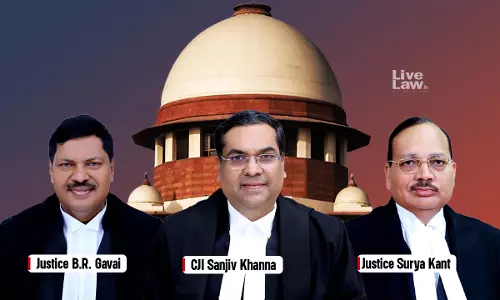

Default Bail Under BNSS: Sixty Days or Ninety Days -- The Confusion Continues
Article 21 of the Constitution of India declares that no person shall be deprived of his life or personal liberty except according to procedure established by law. The right to default bail is part of the procedure established by law under Article 21 of the Constitution. It is, therefore, not merely a statutory right but a fundamental right granted to an accused person.1Clause (a) of the first proviso to Section 167(2) of the Code of Criminal Procedure, 1973 (for short 'the Code'), which...
Malankara-Jacobite Dispute : Supreme Court Sets Aside HC Direction To Hand Over Churches, Says 'Police Going Inside Religious Places Bothers Us'
The Supreme Court on Thursday (January 30) set aside the directions of the Kerala High Court which directed the State authorities to take over the possession of six churches from the Jacobite faction and hand them over to the Malankara Orthodox faction.A bench comprising Justice Surya Kant and Justice N Kotiswar Singh asked the division bench of the High Court to take a fresh decision on...
S. 27 Evidence Act | Disclosure Statements Alone Are Insufficient For Conviction Without Supporting Evidence : Supreme Court
The Supreme Court stated that a disclosure statement under Section 27 of the Indian Evidence Act unaccompanied by the supporting evidence is not sufficient to prove the guilt of the accused beyond a reasonable doubt. The Court reasoned that the conviction cannot be solely based on the disclosure statement because it is considered a weak piece of evidence.The bench of Justice Abhay S. Oka...

Can Property Of Person Accused Under Prevention Of Corruption Act Be Seized Or Frozen U/S 102 CrPC? Supreme Court To Decide
In the backdrop of divergent High Court views on the point, the Supreme Court is set to decide the issue as to whether Section 102 CrPC, which deals with police officer's power to seize certain property, shall apply to a criminal case registered under the Prevention of Corruption Act."The petitioner has raised an interesting issue with regard to the exercise of the power by the...
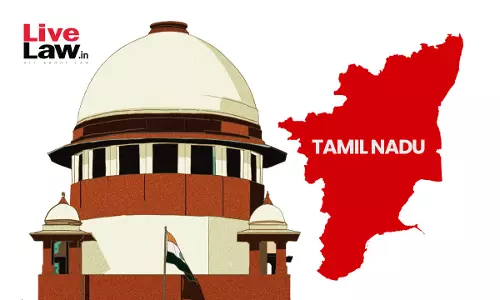
'Tanneries Caused Irreversible Damage' : Supreme Court Passes Directions On Pollution In TN's Vellore, Asks Polluters To Compensate
The Supreme Court on Thursday (January 30) issued a set of directions to mitigate the pollution caused by the enormous discharge of untreated effluents by tanneries into the Palar River in Vellore District(Tamil Nadu).Notable among them are the directions to pay compensation to the affected families, to recover the compensation from the polluting industries as per the "polluter pays"...
IBC | For Resolution Plan Involving Combination, Prior Approval Of Competition Commission Mandatory Before CoC Examination : Supreme Court
The Supreme Court on January 29, by 2:1 majority, observed that a resolution plan under the Insolvency and Bankruptcy Code, containing a proposed combination(a merger or amalgamation of entities), should only be placed before the Committee of Creditors (CoC), after it has been approved by the Competition Commission of India (CCI).In this regard, the Court referred to Section 31(4) proviso of...
Art. 226 | Writ Petition Not Maintainable Against NBFC; Private Company's Banking Business Not 'Public Function' : Supreme Court
The Supreme Court recently stated that an entity being subject to regulatory guidelines under a statute does not automatically make it subject to Writ Jurisdiction. Instead, Writ Jurisdiction applies only when it can be demonstrated that the entity is performing a public duty or function concerning its responsibilities. A bench of Justice JB Pardiwala and Justice R Mahadevan summed up...
When Can Stranger To Suit Seek Leave To Appeal Against Decree? Supreme Court Lays Down Principles
In a judgment delivered on January 29, the Supreme Court discussed the circumstances under which a third party to a suit can seek leave to appeal against the decree.A bench comprising Justice JB Pardiwala and Justice R Mahadevan made this discussion while considering an appeal filed by a lis pendens transferee, who was aggrieved by the High Court's refusal of leave to appeal against a decree...