


Law School Articles

Trading Trees For Credits
What Two Years of India's Green Credit Programme RevealedWhat happens when a country decides that environmental obligation is best met through the market? India's Green Credit Programme (GCP), launched in October 2023, is two years into answering that question, and the answer is worth paying attention to. The Green Credit Programme was launched under India's flagship Lifestyle for Environment (LiFE) initiative with a huge promise. It was set to go beyond carbon to also reward tree plantation,...
Rajya Sabha–Chief Minister Paradox
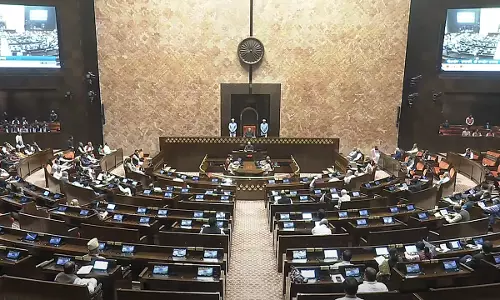
Somewhere between the letter and the spirit of India's Constitution lies a curious paradox: a man can, under existing law, simultaneously hold membership of the Rajya Sabha, the upper chamber of the Union Parliament, and serve as the Chief Minister of a state. The courts have not struck this down. The Constitution does not forbid it in explicit terms. And yet, if you pause to think about what it actually means, the arrangement is architecturally incoherent.Bihar Chief Minister Nitish Kumar took...

Copyright And Trademark Enforcement In Digital Audio Industry: A Case Study Of Pocket FM V. Kuku FM
The case of Pocket FM and Kuku FM has become one of the major public disputes in the Indian audio entertainment space.[1] The dispute began in 2022, when Kuku FM (Mebigo Labs Pvt. Ltd.) sued Pocket FM over accusations that Pocket FM had used Kuku FM's licensed Hindi translation of “Mossad.” Although Pocket FM subsequently deleted the audiobook from its catalogue, this first episode revealed uncertainties related to rights management. The rivalry deepened recently, when Pocket FM itself sued Kuku...
From Whiskey To Weight-Loss Drugs: Rethinking Surrogate Advertising In Pharma
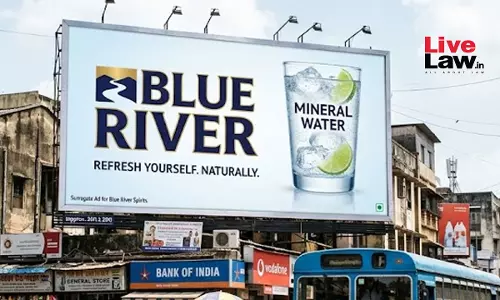
Battling concerns that a third of the Indian population will become obese by 2050, the Central Drugs Standard Organisation issued warnings to pharmaceutical companies in early 2026.[1The regulator has forewarned entities about their indirect promotion disseminated in the guise of disease awareness campaigns and social media collaborations featuring influencers and Bollywood actors regarding their weight-loss drugs. These campaigns focus on highlighting the efficacy of medicine or pharmaceutical...

Agricultural Land Under Valuation Rules, 2017: Who Is Qualified To Value What Law Forgot?
India holds millions of hectares of land within the corporate asset portfolios, yet the Companies (Registered Valuers and Valuation) Rules, 2017, which govern the entire framework for valuation of company assets, are silent about how the agricultural lands are to be valued, who is qualified to value them, and whether they fall within any prescribed asset class. This silence constitutes not just...
CAPF Stagnation And Problem Of Legislative Override
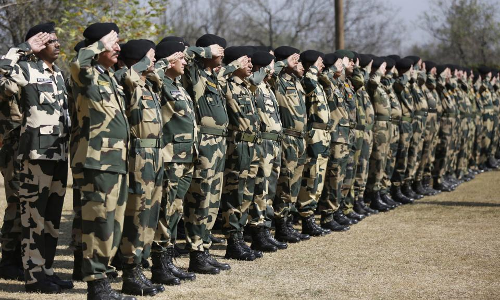
Recently, the Central Government has brought the Central Armed Police Forces (General Administration) Bill, 2026, or the CAPF Bill, 2026, which was passed by the Lok Sabha. The Bill seeks to codify the deputation of IPS officers to the ranks of Inspector General(IG) and above, while also reserving the power under section 4 to lay down or modify the rules governing the administration and functioning of the Central Armed Police Forces, namely the BSF, SSB, ITBP, CRPF and CISF, as listed in the...

IBC Overrides Securities Law? NCLAT's Expanding Jurisdiction Over Frozen Demat Accounts
Can a stock exchange continue to freeze the assets of a corporate debtor even after the commencement of insolvency proceedings? More importantly, does such regulatory action survive the overarching framework of the Insolvency and Bankruptcy Code, 2016 (“IBC”), which seeks to preserve and maximize the value of the debtor's assets?These questions recently came into sharp focus before the National Company Law Appellate Tribunal (“NCLAT”) in two appeals involving BSE Limited, wherein the Tribunal...

Section 32A's Clean Slate: A Promise That Rarely Materializes
Section 32A of the Insolvency and Bankruptcy Code, 2016, was introduced through the IBC (Amendment) Act, 2019, to assure resolution applicants that, once a compliant plan is approved and control shifts to a new management, the corporate debtor and its property would begin on a clean slate, being free from liability for offences committed before the commencement of CIRP. The constitutional validity of this provision was upheld by the Supreme Court in Manish Kumar v. Union of India, which...

Identity On Trial: Constitutional Debate On Transgender Rights In India
In recent weeks, a familiar yet unsettled question has returned to discussion: who has the authority to define identity? For transgender people, it is not merely a discussion, but one that shapes their access to education, employment, and ultimately, dignity. The marginalisation of transgender persons has been consistent, as society confines them to roles of entertainment and cultural bridges. Moreover, the recent amendments to the Transgender Persons (Protection of Rights) Act, 2019 have raised...
Constitutional Morality Vs Public Health: Blood Safety, Scientific Evidence And Exclusion Of Queer Donors
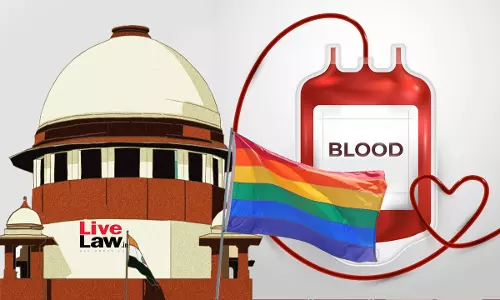
Indian constitutionalism today is characterized by a sharp divide between the forward-looking and right interpretation of the Constitution by the Supreme Court on the one hand, and the on-going sluggishness of the executive on the other. The Supreme Court of India continues to be the venue of an intense debate over the Guidelines for Blood Donor Selection and Blood Donor Referral, 2017. While the judiciary has spent the last decade in progressive interpretation of legislation and coming out in...

Myth Of Formalisation: Economic Survey Projections And Governance Challenges In India's Labour Codes
India's new labour codes have been promoted as reforms with the potential to bring major change whose draft rule was issued in December 2025. The Economic Survey 2025–26 presents an optimistic outlook: the codes are expected to raise formalisation from 60.4% to 75.5%, create 77 lakh jobs, lower unemployment, increase female labour force participation, and add 1.25% to GDP by 2029–30. These projections are based on the assumption that simplifying compliance for firms will encourage formalisation...

Illusion Of Protection: How Transgender Amendment Bill, 2026 Risks Failing Those It Claims To Protect
Transgender basically refers to a person whose gender identity differs from that of the gender which is assigned to them at birth, and it also includes the identities based on self-perception rather than only biological traits. It basically recognises the important aspect that gender is a deeply personal and self-determined aspect of a person's identity, unlike a narrower biological term such as “transsexual”. The same understanding has been constituted and affirmed in the case of National Legal...