


Top Stories
Difference Between FIR Registration Provisions Under S. 154 CrPC & S. 173 BNSS: Supreme Court Explains
The Supreme Court recently explained the difference between the provisions governing the registration of a First Information Report (FIR) and the conduct of preliminary inquiry under CrPC and its replacement Bharatiya Nagarik Suraksha Sanhita.The Court observed that while Section 173(1) of BNSS is substantially similar to Section 154 CrPC regarding the recording of information, the...

Supreme Court Refuses To Entertain Another Petition Challenging Places Of Worship Act; Allows Petitioner To Intervene In Pending Proceedings
The Supreme Court today (April 1) refused to entertain a writ petition challenging the validity of S.4(2) of the Places of Worship Act 1991 which provides any legal proceedings on the religious character of a place of worship initiated before August 15, 1947 shall be terminated on the commencement of the Act. The Court however granted liberty to the petitioner to file an application in...
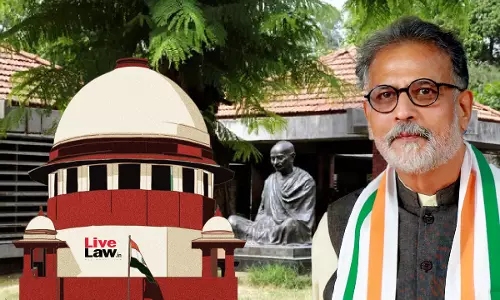
Supreme Court Dismisses Tushar Gandhi's Plea Against Gujarat Govt's Sabarmati Ashram Redevelopment Project
The Supreme Court on Tuesday (April 1) dismissed a petition filed by Tushar Gandhi, great-grandson of Mahatma Gandhi, challenging the Gujarat government's decision to revamp/redevelop the Sabarmati Ashram in Ahmedabad at the estimated cost of ₹1,200-crore.A bench comprising Justice MM Sundresh and Justice Rajesh Bindal dismissed the Special Leave Petition filed by Gandhi against the...
S.482 CrPC/S.528 BNSS | No Absolute Bar On High Court Quashing FIR At Nascent Stage Of Investigation: Supreme Court
The Supreme Court recently observed that there is no absolute rule preventing a High Court from quashing an FIR by exercising its power under Section 482 of CrPC and its equivalent Section 528 of the Bharatiya Nagarik Suraksha Sanhita (BNSS), merely because the investigation is at a nascent stage.“There is no absolute rule that when the investigation is at a nascent stage, the High Court...
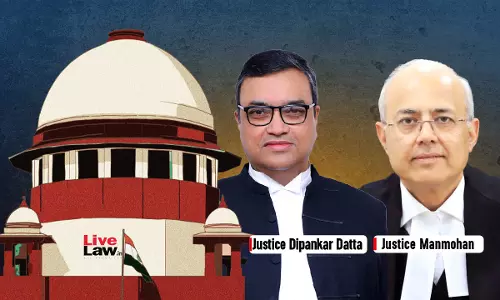
S.256 CrPC/S.279 BNSS | Absence Of Complainant Will Not Always Lead To Acquittal Of Accused : Supreme Court
The Supreme Court held that the non-appearance of a complainant will not always result in the acquittal of the accused as per Section 256 of the Code of Criminal Procedure (corresponding to Section 279 of the Bharatiya Nagarik Suraksha Sanhita).The Court interpreted Section 256 Cr.P.C. to mean that acquittal under this section is warranted only when the complainant is absent on the date which...
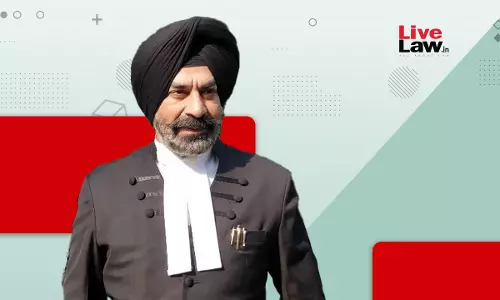
Legal Battles Faced By Punjab Government Under Former Advocate General Gurminder Singh's Tenure
During the 18-month tenure of former Advocate General Gurminder Singh(who recently resigned as the AG), the Punjab government witnessed several significant developments and challenges in the Courtroom. From the farmers' protest to the accusation of abuse of power by ruling party in Elections, Singh played a pivotal role in the state's legal battles. Here is a look back at the legal developments during the former AG's tenure and the challenges that lie ahead.ElectionsOne of the most challenging...
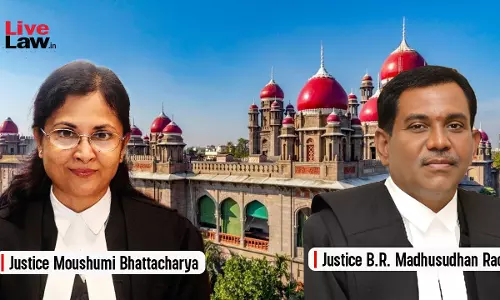
Cohabitation Built On Deception Without Proven Customary Divorce From First Wife Amounts To Rape: Telangana HC
The Telangana High Court has held that cohabitation built on deception without proven customary divorce from first wife amounts to rape. A division bench of Justices Moushumi Bhattacharya and BR Madhusudhan Rao held: "Under section 5(i) read with section 11 of the 1955 Act, if the husband is already a married man, the subsequent marriage is void ab initio and has no sanctity in law. Since...
Giving Arrest Memo Not Same As Supplying Grounds Of Arrest : Supreme Court Sets Aside Arrest & Remand
The Supreme Court recently set aside the arrest and remand for an appellant in the light of the decision in Prabir Purkayastha v. State (2024), which held that supplying grounds of arrest in writing as prescribed under Section 50 of the Code of Criminal Procedure requires mandatory compliance, lest the arrest and remand will stands vitiated in the eyes of the law. A bench of Justices MM...
Art 311 Doesn't Mean Only Appointing Authority Can Initiate Disciplinary Action Against Govt Servant : Supreme Court
The Supreme Court reaffirmed that the appointing authority is not required to initiate disciplinary proceedings against a state employee. Referring to Article 311(1) of the Constitution, the Court clarified that while the appointing authority's approval is necessary for dismissal, it is not required for initiating disciplinary action.Holding so, the bench of Justice Dipankar Datta and...
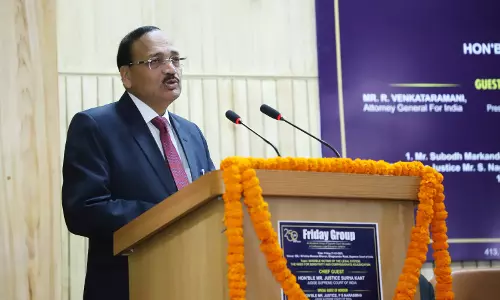
Courts Should Also Consider 'Invisible' Victims Who Might Be Impacted By Adjudication : Justice Surya Kant
Supreme Court Judge, Justice Surya Kant recently expressed the need for the justice system to be considerate towards the rights of those individuals who are affected by a legal decision but virtually invisible before the Courts. Justice Surya Kant spoke extensively on the " Invisible Victims of the Legal System : The Need for Sensitivity & Compassionate Adjudication" at the 250th...
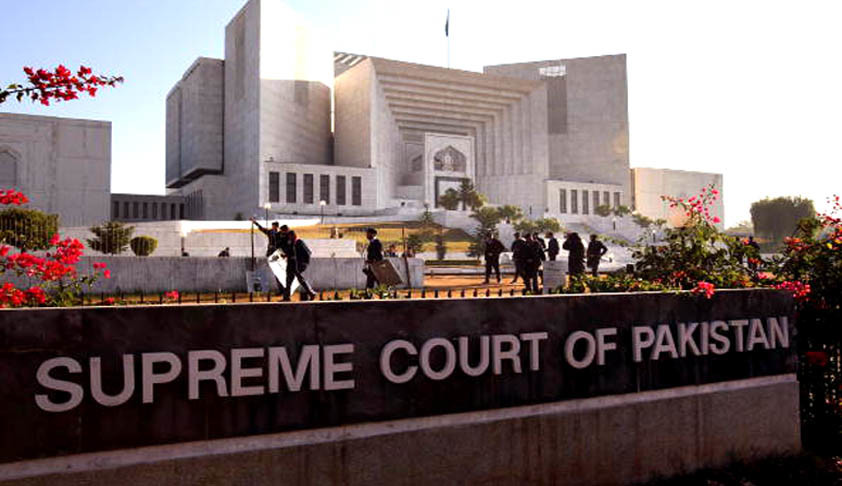
Supreme Court Of Pakistan Cites Indian Supreme Court's Judgment On Avoiding Gender Stereotypes
In a significant judgment for gender equality and continued recognition of women's legal rights, the Supreme Court of Pakistan overturned the judgment of a Khyber Pakhtunkhwa Service Tribunal, Peshawar, which held that "a married daughter becomes a liability of her husband" and therefore, not eligible for compassionate appointment of the deceased son/daughter quota. It held that the...

Supreme Court Weekly Round-up: March 17, 2025 To March 24, 2025
Nominal IndexCitationsJoyi Kitty Joseph v. Union of India & Ors. 2025 LiveLaw (SC) 298Gyanendra Singh @ Raja Singh v. State of U.P. 2025 LiveLaw (SC) 299State of Rajasthan v. Indraj Singh 2025 LiveLaw (SC) 300V Ravikumar v. S Kumar 2025 LiveLaw (SC) 301Rajneesh Kumar Pandey & Ors. v. Union of India & Ors, Writ Petition (Civil) No. 132/2016 2025 LiveLaw (SC) 302Union Territory of...