



- Home
- /
- High Courts
- /
- Madhya Pradesh High Court
- /
- Daughter's Claim Cannot...
Daughter's Claim Cannot Automatically Be Treated As Superior To Grandson's For Compassionate Appointment: MP High Court
Jayanti Pahwa
22 Oct 2026 12:00 PM IST
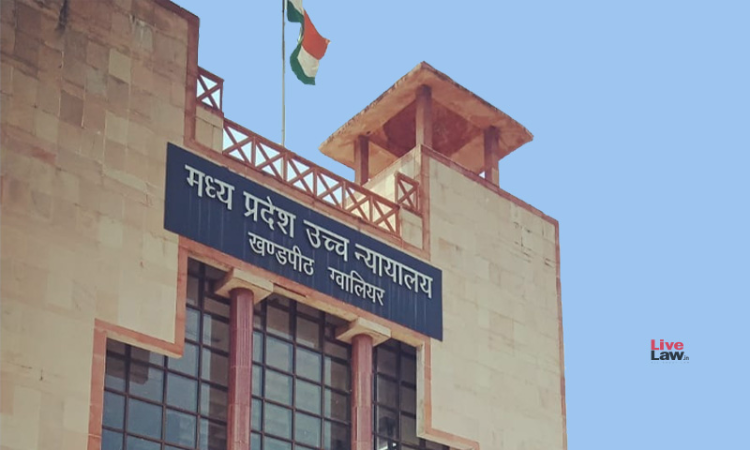
The Madhya Pradesh High Court held that the claim of a deceased government employee's daughter for compassionate appointment cannot automatically be deemed to be superior to a grandson's claim. [2026 LiveLaw (MP) 421]Emphasizing that compassionate appointment is required to be examined per the governing State policy and facts of the case, the bench of Justice Anand Singh Bahrawat...
This is a premium content
Available exclusively to
Our subscribers
Subscribe Premium 
INR 1099+GST
Your support helps us to bring you more content at
an affordable subscription scheme !!!
All payment options available
The Madhya Pradesh High Court held that the claim of a deceased government employee's daughter for compassionate appointment cannot automatically be deemed to be superior to a grandson's claim. [2026 LiveLaw (MP) 421]
Emphasizing that compassionate appointment is required to be examined per the governing State policy and facts of the case, the bench of Justice Anand Singh Bahrawat held,
"Merely because the intervener is the daughter of the deceased employee, her claim cannot automatically be treated as superior to that of the petitioner (grandson). The question of compassionate appointment is required to be examined in accordance with the applicable policy and the facts placed before the competent authority".
Per the grandson, his grandmother was a government employee working as a Dai in a government Ayurvedic Dispensary in District Bhind. The petitioner's father died in 2008 when he was only 12 years old. Thereafter, he, his widowed mother, two sisters, and a younger brother were dependent on his grandmother for their survival.
The petitioner claimed that his grandmother died in December 2015. Being a dependent family member, the grandson therefore filed an application for compassionate appointment in June, 2016. It was claimed that the petitioner had all the required educational qualifications. The screening committee considered his application, and accordingly he was appointed to the post of Dawasaj through an order dated August 29, 2016, on probation for three years.
Thereafter, a false complaint was filed alleging that he did not fall within the definition of dependent under Clauses 2.1 to 2.7 of the policy of September 2014, and a show cause notice was issued to the petitioner. Despite his reply and statement, the Divisional Ayush Officer (respondent no. 3) passed the impugned order in February 2019 cancelling his appointment.
The counsel for the petitioner argued that his appointment was cancelled without providing him an opportunity of hearing and that cancelling the appointment of a 4th class employee is a major penalty under the Civil Services (Classification, Control and Appeal) Rules, 1966.
The counsel for the petitioner further argued that under Clauses 2.5 and 2.7 of the said policy, any adopted son or nominated member is eligible for appointment where both the husband and wife are deceased. It was argued that the petitioner was nominated by his grandmother in her service records and thus, his appointment was lawful and without any misrepresentation.
The counsel for the respondent argued that the impugned order was rightly passed since he does not fall within the definition of eligible dependents under clauses 2.1 to 2.7 of the Policy. It was argued that the objective of the policy is to provide a source of livelihood to the dependents of the deceased government employee and therefore, the petitioner, being the son of the widowed daughter, is not an eligible dependent.
The court noted that the issue for consideration was whether the respondents were justified in cancelling the petitioner's appointment after he had been appointed upon consideration of his case by competent authority and had continued in service for several years.
The court emphasized that compassionate appointment is an exception to the normal rule of employment and cannot be claimed by a person contrary to governing policy.
However, the bench noted that the present case ought to be examined on its own facts and merits. The court noted that the petitioner was 'consciously' employed after his case was placed before competent authorities and his circumstances were considered by the Screening Committee.
Therefore, there is no finding in the impugned order that the petitioner obtained the appointment by suppressing material facts or through fraud. Referring to the Supreme Court case of Md Zamil Ahmed v. State of Bihar, the bench noted that a police constable was terminated by the Government fifteen years after his appointment on compassionate grounds.
Considering the aforementioned cases, the bench held,
"The respondents cannot, after having considered the petitioner's case and granted him compassionate appointment, seek to cancel the compassionate appointment after several years on the basis of the very facts which were available to them at the time of compassionate appointment, particularly when there is no finding of fraud or deliberate suppression against the petitioner".
The court also noted that when the impugned order was passed, the petitioner had approached this court and stayed the operation of the impugned order. Thus, the petitioner had been on leave from March 2019 till the present time. Therefore, the petitioner had been in service for approximately 10 years.
Further, on the issue of dependency, the petitioner's claim was supported by the fact that the screening committee had considered his base and recommended his appointment based on the same. On the other hand, the intervenor (daughter) failed to show that she was dependent upon her mother or that she was maintaining the family of the deceased employee. Regarding the family dispute over the appointment, the court noted
"An important aspect of the matter is the provision contained in the policy dated 29.09.2014 regarding the selection of a family member for compassionate appointment where the family members do not give consent to one another. The policy provides that, in such circumstances, the competent authority is required to decide the family member to whom appointment should be given. Thus, the policy itself recognises that disputes or differences among family members may arise and provides a mechanism for the authority to examine the claim and take a decision".
Additionally, the bench emphasized that the question of compassionate appointment is required to be examined per the applicable policy and placed before the competent authority.
Therefore, the court, considering the facts of the case, held that the petitioner should not be deprived of his employment at this stage. Accordingly, the court set aside the impugned order and directed the respondents to permit the petitioner to continue in service on the post of Dawasaj.
For Petitioner: Advocate Raj Bahadur Singh Tomar
For State: Government Advocate K.K. Prajapati
For Intervenor: Advocates Arshad Ali M. Haque and Amin Khan
Tags

Jayanti Pahwa
Jayanti Pahwa is a Correspondent with LiveLaw, covering the Madhya Pradesh High Court

