




Know the Law
Dowry Deaths : How Supreme Court Has Repeatedly Raised Concerns Over Continuing Dowry Menace
The death of Twisha Sharma in Bhopal, which prompted the Supreme Court to initiate suo motu cognisance of allegations of institutional bias and procedural lapses and a CBI investigation, and the death of Deepika Nagar in Greater Noida amid allegations of dowry harassment have once again brought public attention to the issue of deaths of married women in their matrimonial homes.Even...

LiveLaw Explainer| Key Principles Of Constructive Res Judicata
The Supreme Court has reiterated that the doctrine of constructive res judicata, embodied in Explanation IV to Section 11 of the Code of Civil Procedure, is aimed at preventing parties from litigating in instalments and ensuring finality in judicial proceedings. Drawing from a long line of authorities including Kameswar Pershad v. Rajkumari Ruttun Koer, Daryao v. State of Uttar Pradesh 1961...

Child Of Present Indian Citizen Eligible For Citizenship By Registration U/S 5(1)(f): Telangana HC Rejects Centre's 'Former Citizen' Interpretation
The Telangana High Court has held that the phrase “was earlier citizen of independent India” under Section 5(1)(f) of the Citizenship Act, 1955 is not confined only to former Indian citizens, but also includes persons who presently continue to hold Indian citizenship.Section 5 pertains to citizenship by registration and 5(1)(f) states that the Central Government may, on an application made...
Can Customer Of Sex Worker Be Prosecuted For Trafficking? Telangana High Court Explains Scope Of Sections 370 & 370A IPC
The Telangana High Court has held that a customer of a sex worker cannot be prosecuted for the offence of trafficking under Section 370 of the IPC; however the customer can be prosecuted under Section 370A(2) IPC if the sex worker is a trafficked person and the customer had knowledge or reason to believe the same. [2026 LiveLaw (Tel) 88]For context, Section 370 IPC states that whoever, for...
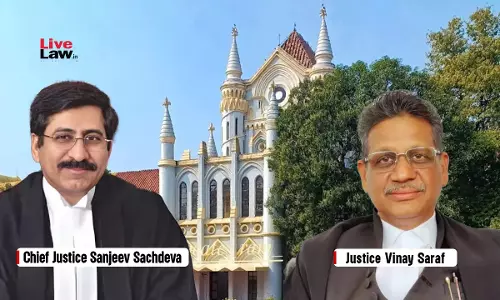
Does Receiving Gratuity as a High Court Judge Prevent a Separate Gratuity for Service as Lokayukta? Madhya Pradesh High Court Answers
The Madhya Pradesh High Court has held that Lokayukts and UpLokayukts are entitled to receive Gratuity for their services, which is independent from the benefits received from High Court Judgeship. [2026 LiveLaw (MP) 218]The division bench of then Chief Justice Sanjeev Sachdeva and Justice Dwarka Dhish Bansal observed,"...petitioners are entitled for the benefit of Death-Cum-Retirement...
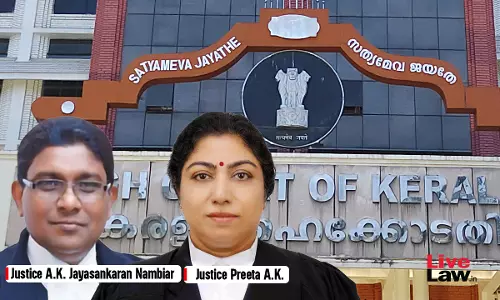
Can Electro-Homeopathy Be Practised Without Registration Under Medical Laws? Kerala High Court Answers
The Kerala High Court in a recent judgment clarified that the practice of Electro-Homeopathy is not unregulated. [2026 LiveLaw (Ker) 335]The Division Bench of Dr. Justice A.K. Jayasankaran Nambiar and Justice Preeta A.K. observed that the practice of alternative medicine is, in fact, regulated by the provisions of the the Kerala State Medical Practitioners Act, 2021 and before that,...
S. 483(2) BNSS | Can Bail Plea Be Heard In Victim's Absence If They Choose Not To Appear Despite Notice? Allahabad HC Answers
Interpreting Section 483 (2) BNSS, the Allahabad High Court has clarified that a bail application in certain cases of rape involving minors can be heard even if the informant or complainant/victim is absent, provided they were duly informed about the proceedings [2026 LiveLaw (AB) 324]. The Court stressed that the statutory mandate is to provide the complainant an opportunity of...
LiveLaw Explainer | What Are Principles Of Promissory Estoppel
The Supreme Court has comprehensively restated the principles governing the doctrine of promissory estoppel, holding that governmental assurances are not empty declarations and that the State cannot arbitrarily withdraw promises on which citizens have acted to their detriment.In a judgment concerning the withdrawal of industrial incentives, the Court observed that promissory estoppel is...
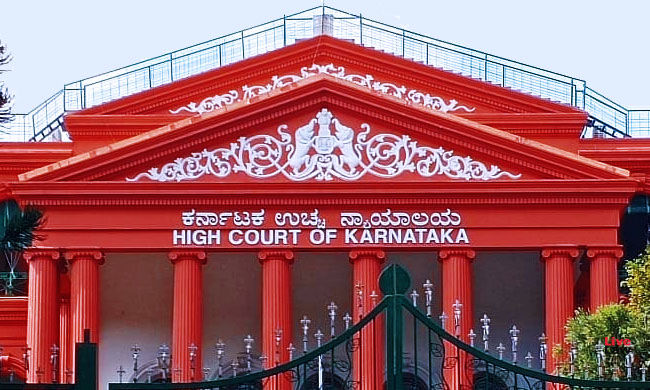
Does Daughter Have Coparcenary Rights In Grandfather's Self-Acquired Property Allotted To Father In Partition? Karnataka High Court Answers
The Karnataka High Court on Tuesday (June 16) ruled that properties inherited by daughter's father from her grandfather–which he had acquired on his own, become individual/ separate properties of her father. [2026 LiveLaw (Kar) 210]Such properties would not assume the character of ancestral property at the hands of the father merely because they were received through a family partition,...
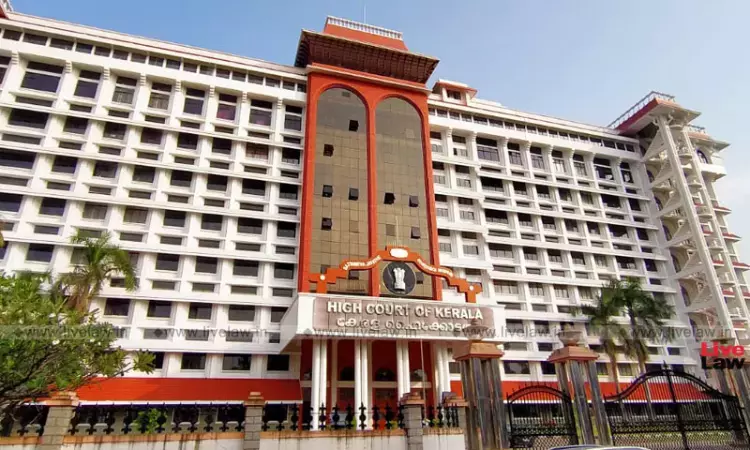
Can Family Court Decide Marital Status After Alleged Husband's Death? Kerala High Court Answers
The Kerala High Court has held that Family Courts do not have jurisdiction to adjudicate disputes concerning the validity of a marriage or matrimonial status when one of the alleged spouses had died before the proceedings were instituted. [Citation: 2026 LiveLaw (Ker) 328]It further held that such disputes are ordinary civil disputes to be decided by civil courts.A Division Bench...
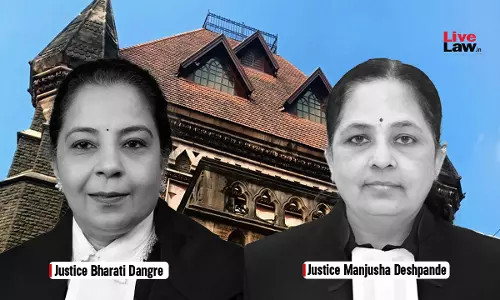
Can A Divorced Wife Claim Maintenance Or Seek Its Enhancement From Ex-Husband's Estate After His Death? Bombay High Court Answers
In a significant ruling, the Bombay High Court held that a divorced woman though can continue to seek maintenance based on a decree, from the husband's estate or properties even after his death, however, she cannot seek enhancement of the same maintenance from the said estate after his death. [Citation: 2026 LiveLaw (Bom) 284]A division bench of Justice Bharati Dangre and Justice...
Can A Fresh Cheque Bounce Complaint Be Filed After Withdrawal Of A Premature Complaint? Rajasthan High Court Answers
The Rajasthan High Court has dismissed a petition seeking quashing of proceedings under Section 138 NI Act on the ground that the complaint filed in 2016 was time barred and filed without any application for condonation of delay under the Limitation Act. [Citation: 2026 LiveLaw (Raj) 244]The bench of Justice Anoop Kumar Dhand held that if an earlier complaint that was found to be premature,...