



Section 91 CrPC Cannot Be Used During Preliminary Verification Without Formal Investigation Or Inquiry: J&K&L High Court
LIVELAW NEWS NETWORK
22 Oct 2026 12:57 PM IST
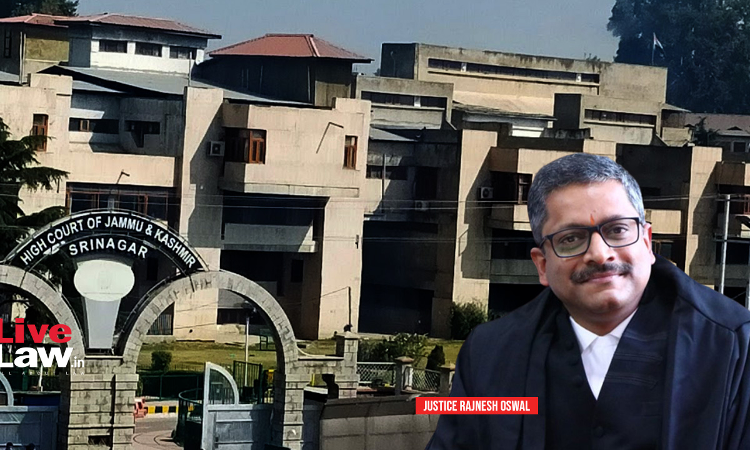
The Jammu & Kashmir and Ladakh High Court has held that the Crime Branch cannot invoke Section 91 of the Code of Criminal Procedure (CrPC) to compel a person to produce documents during preliminary verification of a complaint when no formal investigation or inquiry under the Code has commenced.
Quashing criminal proceedings against one Jaydeep Singh Jadeja, the Court held that preliminary verification is confined to ascertaining whether the allegations disclose a cognizable offence and cannot be converted into an investigation to test the veracity of the allegations or compel a proposed accused to furnish documents or information.
The Court was hearing a petition under Section 528 of the Bharatiya Nagarik Suraksha Sanhita (BNSS), seeking quashing of a complaint pending before the Special Mobile Magistrate, Passenger Tax and Shops and Establishment Act, Jammu, as well as the trial court's order, issuing process against the petitioner under Section 175 of the Indian Penal Code (IPC).
Justice Rajnesh Oswal, allowing the petition, observed that once the respondents admitted that no investigation or inquiry under the CrPC had been initiated, the Crime Branch could not lawfully resort to Section 91 of the Code. The Court held that the resulting complaint under Section 175 IPC could not be maintained on the basis of an impermissible notice.


The case originated from a complaint filed by Mohd. Shafiq Sohil with the Crime Branch, alleging that Jadeja, Director of M/s Ashpura Road Lines, had duped him of ₹40 lakh in connection with a sub-contract under the National Highways Development Project Phase-II.
The contract concerned EPC-mode construction of a section of National Highway-1, now NH-44, between kilometre 172 and kilometre 182 in Jammu and Kashmir.
According to the complaint, the Crime Branch repeatedly asked Jadeja to appear and provide records relevant to the preliminary verification. Notices dated May 19, 2023, and July 18, 2023, were issued under Section 91 CrPC.
The complainant alleged that Jadeja neither produced the requisite records nor appeared before the investigating agency, leading to a complaint under Section 175 IPC.
Jadeja approached the High Court, contending that the Crime Branch lacked jurisdiction to issue the notices because no investigation or inquiry under the CrPC was underway. He also maintained that he had already submitted a detailed reply and relevant documents. The Union Territory opposed the petition, submitting that the notices were issued during preliminary verification and that the petitioner had failed to cooperate.
Court's Observations
The High Court examined Section 91 CrPC, which empowers a court or an officer in charge of a police station to require the production of documents or other things considered necessary or desirable for an investigation, inquiry, trial or other proceeding under the Code. The Court noted that the provision operates within the framework of proceedings contemplated by the CrPC.
A material circumstance was the State's admission that the Crime Branch was not conducting a formal investigation or inquiry under the Code but was only undertaking preliminary verification to determine whether registration of an FIR was warranted. The Court observed that Section 91 could not be invoked in these circumstances.
It held,
“Once it is conceded by the respondent that no investigation or inquiry under the Code of Criminal Procedure had been initiated, the authority could not have lawfully resorted to Section 91 CrPC.”
The Court also considered Section 173(3) BNSS, which expressly provides for preliminary inquiry in specified cases, subject to prior permission from an officer not below the rank of Deputy Commissioner of Police. It noted, however, that the notices in the present case had been issued before the BNSS came into operation.
The Court referred to the Supreme Court's decision in Lalita Kumari v. Government of Uttar Pradesh (2014) 2 SCC 1, which explained that preliminary inquiry is intended to determine whether the information received discloses a cognizable offence, rather than to test the truthfulness of the allegations.
The Bench clarified that preliminary verification cannot assume the character of an investigation. It observed,
“The preliminary verification cannot partake the character of investigation to ascertain veracity of the allegations and the enquiry officer cannot compel the proposed accused to share documents or information.”
The Court further found that the trial court had issued process against Jadeja mechanically. Since the resort to Section 91 CrPC was impermissible in law, the complaint under Section 175 IPC could not be maintained against him on that basis.
Allowing the petition, the High Court quashed the complaint pending before the Special Mobile Magistrate, Jammu, along with the order issuing process against the petitioner.
The Court, however, clarified that the Enquiry Officer remained at liberty to proceed with the original complaint in accordance with law.