


Supreme court
After Client Withdrew Complaint, BCI Disciplinary Committee Couldn't Have Imposed Penalty On Advocate : Supreme Court
The Supreme Court on Thursday (January 29) set aside the Bar Council of India Disciplinary Committee's order holding an advocate guilty of professional misconduct, holding that disciplinary proceedings could not be sustained after the complainant-client had unequivocally withdrawn his complaint and expressed satisfaction with the advocate's conduct. “Once the respondent complainant...
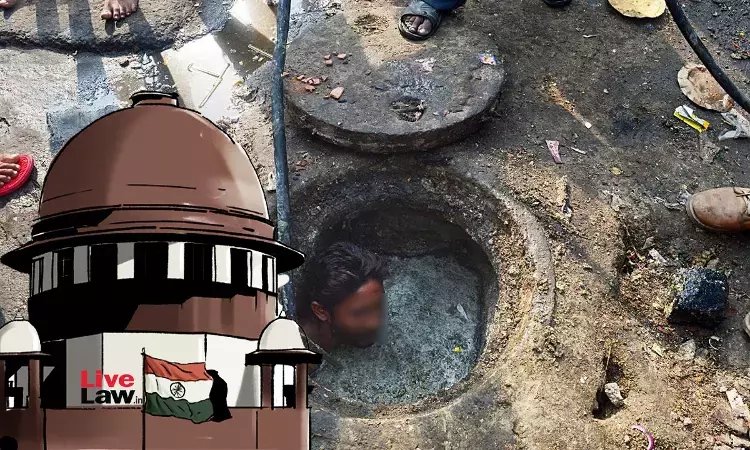
Demolition Of Private Property Must Be Based On Clear Statutory Grounds & Consideration Of All Factors : Supreme Court
Holding that a demolition order affecting property rights under Article 300-A of the Constitution must be founded on clear, cogent, and site-specific evidence of illegality, the Supreme Court on Thursday (January 29) set aside the Calcutta High Court's direction to demolish a fully constructed residential building in Santiniketan, after finding that no material had been placed on record...
Supreme Court Annual Digest 2025: Labour Laws
Administrative order punishing a delinquent employee - Certain generic principles governing interference with orders of punishment that are passed following inquiry proceedings have evolved over a period of time. Law is well settled that an administrative order punishing a delinquent employee is not ordinarily subject to correction in judicial review because the disciplinary authority...
Only Civil Court Of Original Jurisdiction Can Extend Arbitral Tribunal's Mandate, Not Referral Courts : Supreme Court
The Supreme Court on Thursday (January 29) held that applications for extending an arbitral tribunal's mandate under Section 29A (4) of the Arbitration & Conciliation Act, 1996 must be filed exclusively before the 'Court' as defined in Section 2(1)(e) i.e., the principal civil court of original jurisdiction, regardless of which authority appointed the arbitrators. A bench of Justices...
Industrial Court Proper Forum To Decide Issues Regarding Contract Labour : Supreme Court
The Supreme Court observed that the Industrial Court established under the Industrial Disputes Act, 1947 is the proper forum for adjudication of the dispute concerning the employment and termination of employment of the contract labour. “…the proper forum is the Industrial Court/Court for adjudicating issues concerning the employment and termination of employment of contract...
Supreme Court Daily Round-Up : January 28, 2026
Links to today's reports :'Promotes Discrimination Against General Classes' : Lawyer Seeks Urgent Hearing Of Plea In Supreme Court Against UGC RegulationsManipur Violence| Supreme Court Extends Tenure Of Justice Gita Mittal Committee Till July 2026'Fraud' : Supreme Court On General Candidates Seeking Medical Admission As Buddhist Converts, Asks How Minority Certificates GivenSupreme Court...
Waqf Tribunal Can't Entertain Claims Over Properties Not Specified In 'List Of Auquf' Or Not Registered Under Waqf Act : Supreme Court
The Supreme Court on Wednesday (January 28) ruled that Waqf Tribunals have jurisdiction only over properties notified in the “list of auqaf” or registered under the Waqf Act, and not over disputes concerning unregistered properties.A bench of Justices Sanjay Kumar and K Vinod Chandran set aside the Telangana High Court's judgment, which affirmed the grant of an injunction by the Waqf...
Supreme Court Annual Digest 2025: BNSS & Cr.P.C
BHARATIYA NAGARIK SURAKSHA SANHITA, 2023, (BNSS) and The CODE OF CRIMINAL PROCEDURE, 1973, (CrPC) - Supreme Court Annual Digest 2025 Section 2(1)(h). Complaint Section 2(d) Cr.P.C. - Definition of Complaint - Judicial vs. Executive Magistrate - As per Section 2(d) of CrPC, a complaint refers to an allegation submitted orally or in writing to a Magistrate with the intent...