


Supreme court

Know The Law | When Can Sex On Promise To Marry Amount To Offence Of Rape?
Recently, the Supreme Court expressed concern over the 'worrying trend' of initiating criminal proceedings under rape charges soon after a proloned consensual relationship breaksdown.In this explainer, we will dissect the issue of (1) What is a false promise to marry and how it's different from a breach of promise to marry?. (2) When can a promise to marry be considered 'false'? and (3) How can...
Experience Marks Can't Be Denied To Outsourced Employee Performing Regular Duties Though Not In Sanctioned Post : Supreme Court
The Supreme Court held that experience marks cannot be denied solely because a candidate worked as an outsourced manpower. If the candidate performed duties aligned with the sanctioned post, they are eligible for marks, even if the candidate was not appointed on the sanctioned post, the court said. “The first respondent, thus, cannot be denied the benefit of mark for experience merely...
S. 306 IPC | Simple Refusal To Marry Not Abetment To Suicide : Supreme Court
The Supreme Court today set aside the conviction of a man who was charged with the offence of abetment to suicide (Section 306 IPC) because his lover committed suicide upon his refusal to marry her. The bench comprising Justice Pankaj Mithal and Justice Ujjal Bhuyan observed that simple refusal to marry someone would not amount to instigation to commit suicide. Instead, it must be shown...
Highest Bidder In Tender Process Has No Vested Right To Contract : Supreme Court
In a recent case, the Supreme Court observed that the highest bidder in the Notice Inviting Tender (NIT) cannot have a vested right to have the auction concluded in his favor. The Court added that for the contract to be executed, a letter of allotment must be issued in favor of the successful bidder. The bench comprising Justice Bela M Trivedi and Justice Satish Chandra Sharma heard a...
S. 27 Evidence Act | Recovery Based On Statement By Accused Before Recording Of S.27 Disclosure Not Admissible : Supreme Court
The Supreme Court held that an alleged recovery of incriminating materials based on a statement given by the accused en route the police station before the recording of the statement under Section 27 of the Indian Evidence Act at the police station is not admissible.The Court set aside the conviction of an accused in a murder case after noting that the discovery of the incriminating...
While Deciding Application Under S.319 CrPC, Court Must Consider Cross-examination As Well : Supreme Court
In a recent case, the Supreme Court observed that the summoning of an additional accused under Section 319 Cr.P.C. should not be only based on the examination in chief of the prosecution witnesses. The Court said that due credence must be also given to the prosecution witness cross-examination, if exists, before the filing of the application under Section 319 Cr.P.C. The bench comprising...
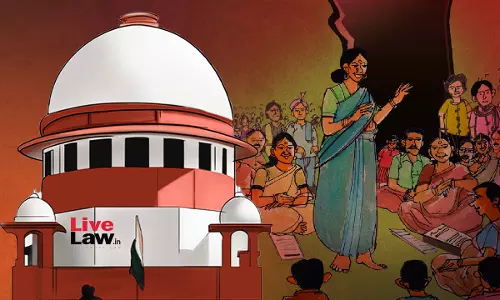
Distressing To Witness Discrimination Against Women In Governance When Country Aspires To Be Economic Powerhouse: Supreme Court
While granting relief to a woman Sarpanch in Chattisgarh against her removal from office, the Supreme Court expressed concerns about the growing trend of bureaucratic harassment against female elected representatives.The Court observed that such recurring instances of bureaucratic officers exacting vendetta against female sarpanches by causing their removal from offices highlight a...
S.164 CrPC Statement Recorded By Judicial Magistrate Can't Be Retracted By Witness On Flimsy Grounds : Supreme Court
The Supreme Court observed that the statements recorded under Section 164 of Cr.P.C. cannot be easily retracted as greater amount of credibility is associated with such statements because they are recorded by a judicial magistrate. The bench comprising Justice Bela M Trivedi and Justice Satish Chandra Sharma heard a criminal appeal filed by the accused who challenged their conviction based...
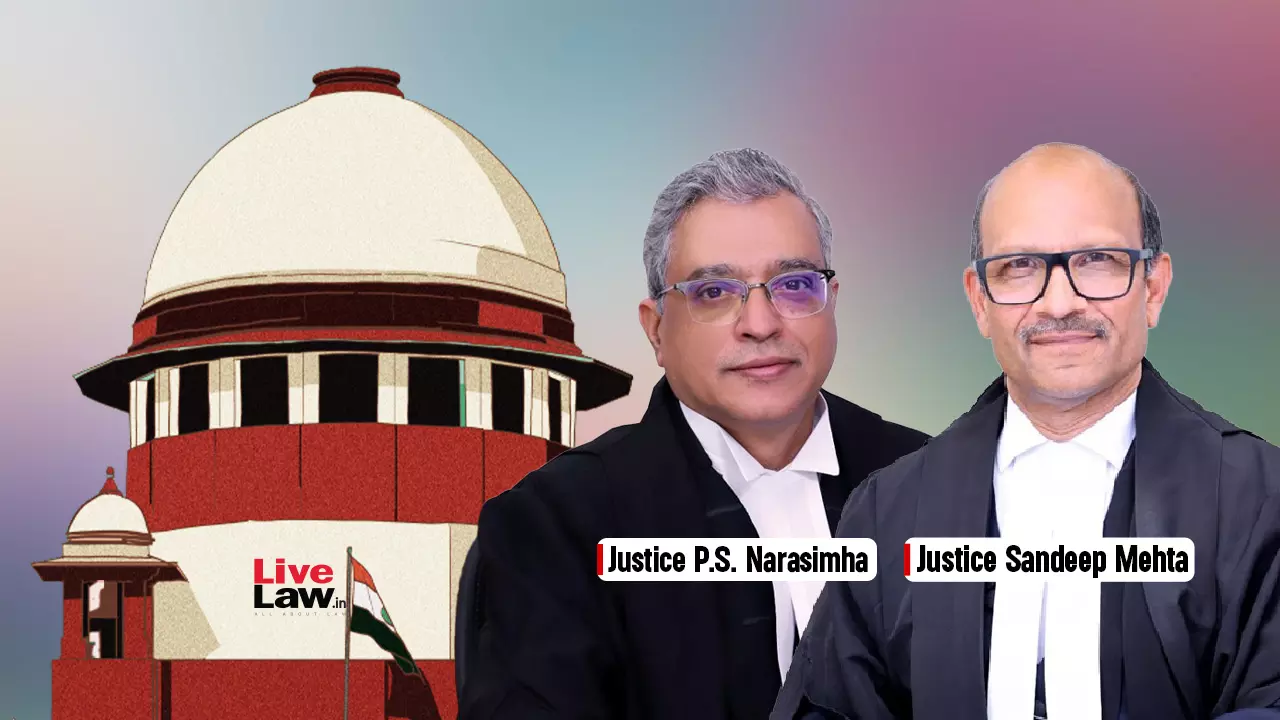
Retired Employee Not Entitled To Retrospective Promotion Or Benefits Of Promotional Post After Retirement : Supreme Court
The Supreme Court on Wednesday (Nov. 27) held that an employee whose promotion was not effectuated before his retirement would not be entitled to retrospective promotion and the notional benefits attached to the promotion. The bench comprising Justice PS Narasimha and Justice Sandeep Mehta observed that “promotion only becomes effective upon the assumption of duties on the promotional post...

Not Necessary That Bribe Amount Should Be Substantial To Draw Presumption Under S.20 Prevention Of Corruption Act : Supreme Court
While convicting a government servant for taking a bribe of Rs.2000, the Supreme Court observed that it was not necessary for the amount involved to be substantial to draw the presumption under Section 20 of the Prevention of Corruption Act, 1988.As per Section 20(3), the Court has the discretion to refrain from drawing adverse presumption against the public servant if the amount involved...