


Patna High Court
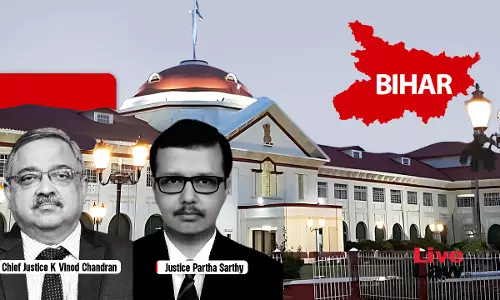
Appellate Authority Has To Consider Grounds Raised In Appeal And Decide On Merits, Even If Appeal Is Heard Ex Parte: Patna High Court
The Patna High Court stated that the Appellate Authority has a duty and an obligation to examine grounds raised by assessee in memorandum of appeal and decide issue on merits even if appeal is filed ex parte. The Bench consisting of Chief Justice K. Vinod Chandran and Justice Partha Sarthy, stated that “the Appellate Authority even while considering the appeal ex parte will have...
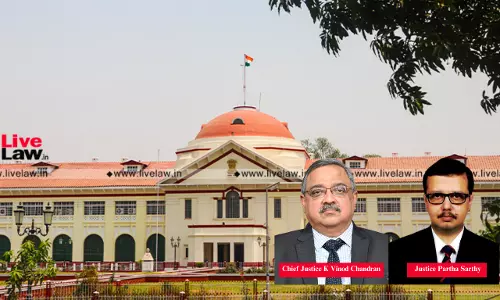
Patna High Court Upholds Reinstatement Of Employee, Rules Compulsory Retirement Must Be Based On Subjective Satisfaction
The Patna High Court recently upheld the reinstatement of a Class-III employee posted in the Governor's Secretariat, Bihar who was made to compulsorily retire from the services in the midst of the departmental proceedings pending against him. Affirming the Single Bench's decision, the Division Bench comprising Chief Justice K Vinod Chandran and Justice Partha Sarthy observed that it would...

Arms License Can't Be Denied Solely On Ground That Applicant Doesn't Have Specific Security Threat/ Imminent Danger: Patna High Court
The Patna High Court recently reiterated that an arms license to an individual cannot be denied solely on the ground that the applicant does not have any "specific security threat or imminent danger". Justice Mohit Kumar Shah set aside the orders of the District Magistrate, Khagaria and Divisional Commissioner, Munger that denied the arms license to the petitioner just because there was no...
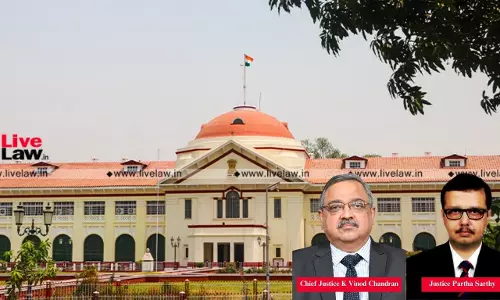
Patna High Court Dismisses Plea Challenging Notifications Extending Timeline For Issuance Of Orders U/S 73(10) Of CGST Act
The Patna High Court has rejected a petition challenging Notifications extending timeline for issuance of Orders under Section 73(10) of the GST Act.The Division Bench, comprising Chief Justice K. Vinod Chandran and Justice Partha Sarthy was dealing with the case where the assessees/petitioners filed writ petition against Notification Nos. 13/2022-Central Tax, 9/2023-Central Tax...

Probate Proceedings End With Death Of Will's Executor, Substitution Of Legal Heirs Not Permissible: Patna High Court
The Patna High Court has said that upon the death of Will's executor, his/her legal heirs cannot be substituted in place of the executor, adding that probate proceedings come to an end upon the death of the Will's executor. Placing reliance on Section 222 of the Indian Succession Act, 1925, Justice Arun Kumar Jha noted that the right to obtain probate is confined to the executor and it can by...
'Time Served On Duty Is Immaterial If Appointment Is Not As Per Law', Patna High Court
A Division Bench of the Patna High Court comprising Justices P. B. Banjanthri and B. PD. Singh held that if a candidate's appointment was not as per law, it would be immaterial as to how many years he has discharged duties in relation to the post. The Bench upheld the order of the Single Judge that had denied relief to the Appellant(Head Clerk) who was appointed to the post...
Limitation Of 5 Years For Seeking Compassionate Appointment Starts On The Date When Cause Of Action Arises', Patna High Court
A Division Bench of the Patna High Court comprising Justices P. B. Banjanthri and B. PD. Singh allowed an appeal challenging the decision wherein an application for compassionate appointment to the post of Constable on the ground that the application was not filed before the authorities within the stipulated time period of 5 years was dismissed by a Single Judge Bench. The Court...
Criminal Appeals Arising From Same Judgment Must Be Heard Together By Division Bench: Patna High Court
The Patna High Court recently ruled that when multiple criminal appeals arise from the same trial court judgment, one involving a sentence of more than ten years and another with a sentence of less than ten years, the appeal with the lesser sentence must also be heard by the Division Bench. “We answer the reference, thus, that in case some of the criminal appeals arising out of the same...
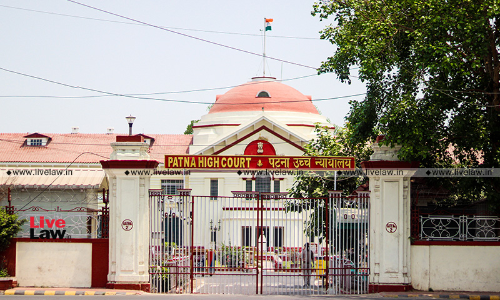
Limitation Of 5 Years For Seeking Compassionate Appointment Starts On The Date When Cause Of Action Arises', Patna High Court
A Division Bench of the Patna High Court comprising Justices P. B. Bajanthri and S. B. Pd. Singh allowed an appeal challenging the decision wherein an application for compassionate appointment to the post of Constable on the ground that the application was not filed before the authorities within the stipulated time period of 5 years was dismissed by a Single Judge Bench. The Court observed...
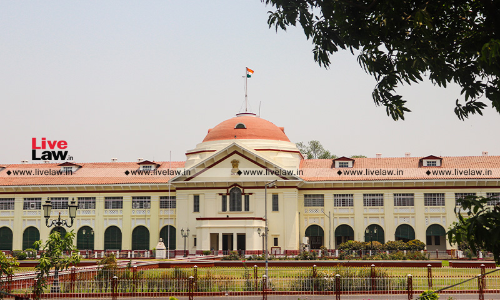
'Candidate Cannot Be Dismissed From Service If Certificates In Dispute Are Not Cancelled', Patna High Court Sets Aside Order Of Dismissal
A Division Bench of the Patna High Court comprising Justices P. B. Bajanthri and S. B. Pd. Singh set aside an order of dismissal observing that as long as the certificates in dispute were not cancelled, the Authorities could not initiate Disciplinary Proceedings or impose penalty in the form of a dismissal order.BackgroundThe Appellant was appointed as an Assistant Engineer on 23.06.1987 in...
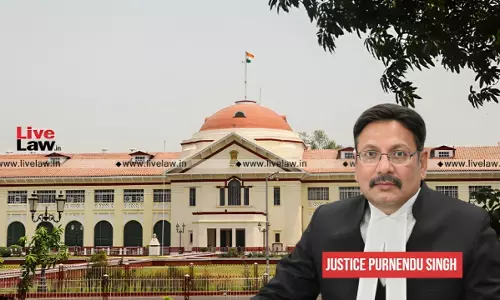
Compassionate Appointment, Employer Must Explore Alternative Posts, If Not Eligible For Specific Post : Patna High Court
A single judge bench of the Patna High Court comprising of Purnendu Singh, Justice, while deciding a writ petition held that in case of compassionate appointments, the employer must explore alternative posts, rather than rigidly adhering to eligibility criteria for specific positions. Background Facts The petitioner hails from Banka, Bihar, is the spouse of Late Guddu Kumar who...
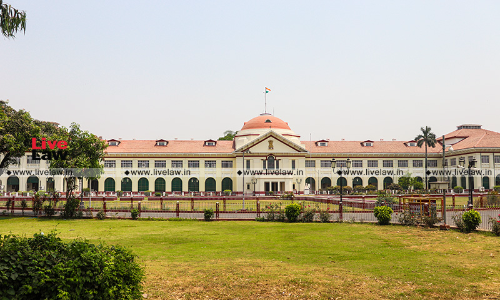
Conviction Under Wrong Provision Of POCSO Act: Patna High Court Orders Release Of Sexagenarian After 10 Years, Enhances Victim's Compensation
The Patna High Court has ordered the release of a man in his sixties, previously convicted by a Sessions Court for the rape of his 12-year-old niece, citing the application of a wrong provision of the Protection of Children from Sexual Offences (POCSO) Act, 2012.The court held that the trial court erroneously sentenced the appellant under Section 6 of the Act, which was not applicable to...