

Articles
The Collegium Must Grow Up: Why Judicial Appointments Cannot Depend On Chance
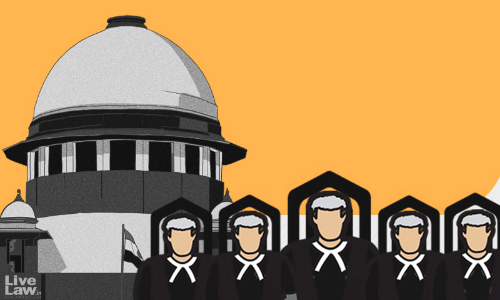
India's judicial appointments system rests on an irony it has never fully confronted. It is a structure devised to insulate the judiciary from executive whim, yet it remains acutely vulnerable to internal accident. Who sits in the collegium on a given day, who has retired a week earlier, and who is technically present but practically excluded can make the difference between elevation and eclipse. That is not constitutional design. It is institutional improvisation.The collegium system was...

Violations That Need No Passport: Borderless Nature Of Personality Rights Harm
In an era where digital communication has dissolved geographical borders, personal identity has become a free-floating asset capable of travelling globally without permission. A person's face, name, voice, movements, and behavioural traits now circulate with alarming ease, often appearing in contexts entirely divorced from reality. The disturbing truth of the twenty-first century is that personality rights violations do not require a passport or a confirmed travel ticket. They move instantly,...
SHANTI Act 2025: Sidelining Environment For Private Proliferation
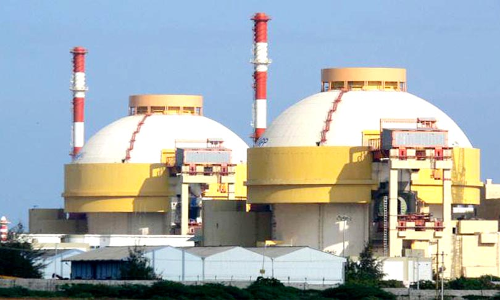
The Parliament recently passed the Sustainable Harnessing and Advancement of Nuclear Energy for Transforming India Bill 2025, now pending President's assent, aiming to accelerate private nuclear expansion in the country's nuclear regime. This will be the first for any nuclear related legislation of the country but at the same time it is neglecting the established environmental regulatory architecture thus presenting a very nuanced relationship between the two. Nuclear energy in all its...
Case For Menstrual Leave: Why It Must Be Codified As A Statutory Right In Labour Codes
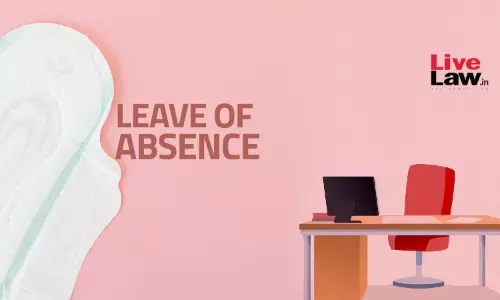
In late 2025, the Karnataka Government took a historic step toward gender-sensitive labour reform by notifying a mandatory 12-day paid menstrual leave for the private sector. While celebrated as a progressive victory under Article 15(3) of the Constitution, the move has landed in the Karnataka High Court in Management of Avirata AFL Connectivity Systems Ltd. v. State of Karnataka, W.P. No. 36659/2025 (Karn. H.C. Dec. 18, 2025). While the Court debates "Executive vs. Legislative" power, a deeper...
Aravalli Reclassification And Constitutional Environmentalism: A Legal Critique
Redefining the Aravalli HillsIn November 2025, the Supreme Court of India formally accepted a uniform definition of the Aravalli hills, as recommended by an expert committee appointed by the Central Government. According to this definition, only landforms exhibiting a minimum relative relief of 100 meters above the surrounding terrain qualify as “Aravalli hills.” This judicial endorsement marks a significant milestone in environmental governance, redefining both the legal and spatial recognition...
Unanswered Questions After The Presidential Reference
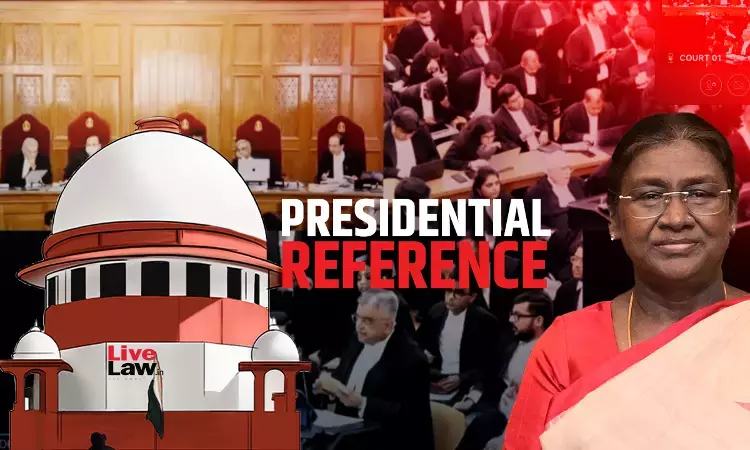
Most of the legal issues adjudicated in State of Tamil Nadu v. Governor of Tamil Nadu were revisited by the Supreme Court in its advisory opinion on the Presidential Reference of 2025. The five-judge Bench, acting under Article 143, delivered an opinion that carries precedential value, which to some extent overruled the law laid down in State of Tamil Nadu. However, as an advisory opinion, it does not alter the final decision or operative directions issued by the Division Bench in...

Why Social Media Needs A Minimum Age Law
In the light of Australia's recent ban on social media for children under 16, India too must reconsider its regulatory landscape and introduce a Minimum Age Law to protect its minors. Across jurisdictions and legal traditions, one principle remains constant: the state has an affirmative duty to protect children from foreseeable harm. This obligation is not merely decorous rhetoric but a binding legal responsibility grounded in domestic statutes, constitutional doctrines, and international...

How Netflix–Warner Bros Merger Could Reshape India's OTT Market
When a single platform begins to exercise influence over both the creation and distribution of content, questions of law inevitably follow. Netflix's proposed acquisition of Warner Bros Discovery has therefore attracted attention not just because of business implications but because it represents a defining moment in determining how competition law will treat such acquisitions in digital and creative industries. The consolidation of extensive content libraries, production capacity, and...
CCI's Clearance Of Avenir–Sammaan Deal: Implications For Competition, Capital, And India's NBFC Future
A Transaction That Extends Beyond Procedural ApprovalThe Competition Commission of India (CCI) has approved the acquisition (C-2025/10/1340) of a significant shareholding in Sammaan Capital Limited (SCL) by Avenir Investment RSC Ltd., a special-purpose vehicle of the Abu Dhabi–based International Holding Company PJSC (IHC). Although the PIB press release makes the approval appear routine, the underlying transaction speaks to broader shifts occurring within India's financial...
Academic Stress & Productivity Loss: The Unspoken Reality Of National Law Universities
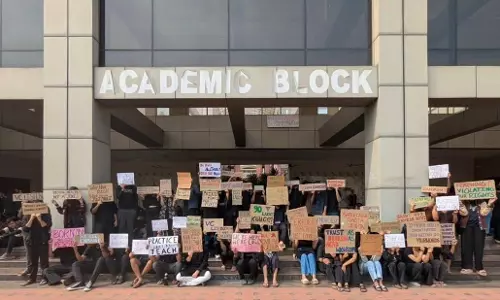
After securing admission through one of India's toughest examinations (CLAT), students arrive at National Law Universities with the hope of entering an environment that matches the effort it took to get there. Their expectations typically revolve around a supportive and intellectually stimulating academic environment with a balanced workload.Students look forward to participating in classroom discussions with professors who mentor them and classmates who challenge them, and a curriculum that...
Liberty To Bleed: Menstrual Leave Policy
The Government of Karnataka has recently issued a Government Order (G.O.) granting 12 days of menstrual leave per year to working women. The operative portion of the G.O. states that women employees aged 18 to 52 working in factories, shops and commercial establishments, plantations, beedi units, and motor transport undertakings are entitled to one paid leave day per month on account of menstruation. Bihar was the first state, introducing a long-standing policy in 1992 that grants two days of...
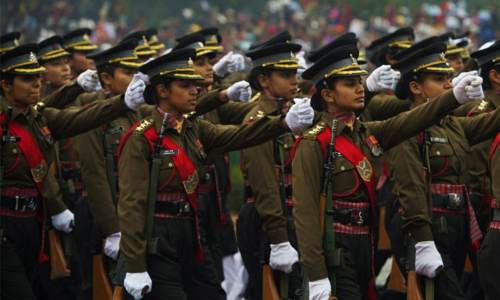
Beyond The Uniform: Why SSC Officers Deserve Pension And Post-Service Opportunities
The structure of Short Service Commission system was designed to infuse young and dynamic talent in Indian Armed forces. The Short Service Commission is certainly a very significant scheme to individuals who would not wish the defence services to form their permanent profession and also to meet the military shortage of officers in the three services. Over a long time before the year 2006, SSC was eligible to stay a period of 5 years after which it could be extended to a period of another 5...