


Articles
Does A State Have Power To Amend Arbitration Act?
Entry 13 in the Concurrent List of the Seventh Schedule of the Constitution of India, 1950 (“the Constitution”), gives the Legislature of the States along with Parliament, the power to “make laws with respect to any of the matters” (see Article 246) set out in the entry. Entry 13 has the following subject-matter: “Civil procedure, including all matters included in the Code of Civil Procedure at the commencement of this Constitution, limitation and arbitration”. Suppose a State intended to amend...
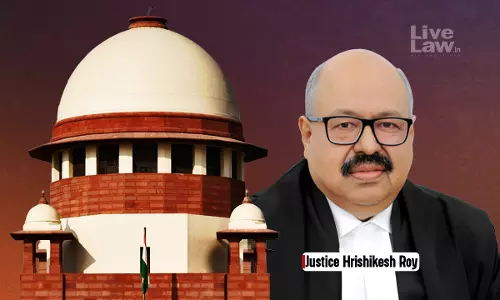
Justice Hrishikesh Roy's Landmark Judgments : A Law Clerk's Account
Justice Hrishikesh Roy demitted office on 1.2.2025 after serving for over 5 years as a judge of the Supreme Court of India. Justice Roy's wit, ever-smiling demeanour and encouragement for juniors is well-known but much remains to be said about the judgments and the individual- on and off the bench. Considering my experience of working for a year at the office of Justice Muralidhar, I received a call for interview for the position of law clerk at Justice Roy's office in December,2022. The...
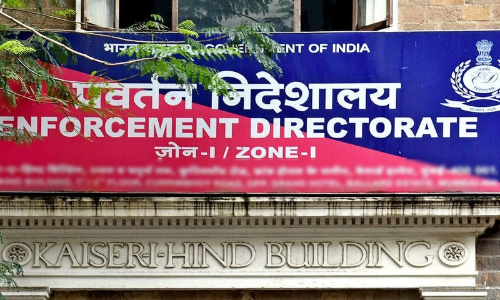
"There Is Something Wrong With The ED"
"Something is rotten in the state of Denmark" is a famous line from William Shakespeare's play Hamlet. Today, one might be tempted to apply this line to India's premier agency for investigating the offence of money laundering, the Enforcement Directorate [ED], which is responsible for investigating economic offences and financial crimes in India in view of their conduct in handling PMLA matters.The dismal state of affairs in handling the cases by ED is evident from the repeated reprimands from...

Default Bail Under BNSS: Sixty Days or Ninety Days -- The Confusion Continues
Article 21 of the Constitution of India declares that no person shall be deprived of his life or personal liberty except according to procedure established by law. The right to default bail is part of the procedure established by law under Article 21 of the Constitution. It is, therefore, not merely a statutory right but a fundamental right granted to an accused person.1Clause (a) of the first proviso to Section 167(2) of the Code of Criminal Procedure, 1973 (for short 'the Code'), which...
![An Unavoidable Conundrum in Section 360 Of BNSS [Withdrawal From Prosecution]](https://www.livelaw.in/h-upload/2024/03/25/500x300_530362-justice-ramkumar-bnss.webp "An Unavoidable Conundrum in Section 360 Of BNSS [Withdrawal From Prosecution]")
An Unavoidable Conundrum in Section 360 Of BNSS [Withdrawal From Prosecution]
AN AVOIDABLE CONUNDRUM CREATED BY THE DEVIATION MADE IN CLAUSE (II) OF THE PROVISO TO SECTION 360 BNSS FROM CLAUSE (II) OF THE PROVISO TO SECTION 321 Cr.P.C. Section 360 of the Bharatiya Nagarik Suraksha Sanhita, 2023 (“BNSS” for short) dealing with “Withdrawal from Prosecution” corresponds to Section 321 of the now repealed Code of Criminal Procedure, 1973 (“Cr.P.C.” for short). Let us make a comparison of the two provisions –SECTION 360 BNSSSECTION 321 Cr.P.C.Withdrawal from...

Taking Simplicity Seriously: An Alternative Approach To Plain Writing In Judgments
On the 4th of March in 2008, an attorney appeared for the appellants in the US court of appeals for the fifth circuit. Seeking relief for a breach of contract from the employer, the bench posed routine questions to him. However, when asked about a particular case, he replied, 'I don't know [the case] Morgan, Your Honor.' When the judge asked him if he tried to read the case, the attorney responded, 'I try not to read that many cases, your Honor.'While the attorney earned being characterised as...

Accusing Judge As Corrupt In Open Court, Does It Not Lower Image Of Judiciary?
Recently, I went through a judgment delivered by the Bombay High Court in the matter of S.B. Patil Versus Manubhai Hargovandas Patel, Criminal Reference No.5 of 2024 decided on September 3, 2024 (reported in 2024 SCC OnLine Bom 3609). Finding the judgment erroneous and contrary to law on the face of it, I collected the record of the reference and was further shocked to note the glaring errors in the said decision of the Bombay High Court and its devastating effect on the judiciary.The facts of...
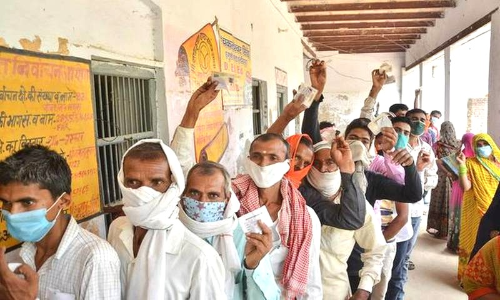
Population-Based Delimitation: Resulting In Unequal Representation
Democracy is the rule of people, by the people,[1] In a democratic system, people rule themselves either by themselves or by their elected representatives. There are two types of representative systems: proportional and territorial. The territorial representation system is based on constituencies or districts, where an elected representative represents the people residing in a particular geographical area. These constituencies are comprised of two things: land and the population residing...

Recording Of Search And Seizure Through Audio-Video Electronic Means Under Section 105 Of The BNSS
Modern perspectives in criminal investigation, by the integration of scientific and electronic techniques with traditional criminal investigation methods, ensure not only efficiency in the investigation but also transparency and accountability in that process.The Supreme Court, over the last few years, has consistently laid emphasis on the need and necessity of presenting scientific and electronic evidence by the prosecution to establish the guilt of the accused. Advancement of information...

Handcuffing: Necessity Or Violation Of Rights?
“Handcuffing is prima facie inhuman and, therefore, unreasonable; it should be the last resort, not the first reflex." - Justice Krishna IyerAny popular media representation of arrest is perhaps incomplete without a scene where the police is handcuffing the arrested person. This scene has left such an indelible mark on our consciousness that we equate arrest with handcuffing, that handcuffing is at the essence of an arrest and that an arrest begins with handcuffing. This surface level and common...

Fake Cops, Real Crimes: The Rise Of Impersonation In Law Enforcement
The alarming rise in impersonation crimes, including the establishment of fake police stations, highlights a significant gap in our regulatory framework. Reports reveal cases where individuals pose as law enforcement officers, judges, military personnel, or state employees to exploit unsuspecting victims. Fake police stations, in particular, prey on citizens' trust, leading to financial exploitation and societal harm.These frauds are no longer limited to physical impersonation. In the digital...

Current Scenario On Death Penalty In Light Of Bharatiya Nagarik Suraksha Sanhita, 2023
India has in the past voted against a draft resolution of the United Nations General Assembly on the abolition of the death penalty. The death penalty has long been a point of contention, with strong views from both abolitionists and retentionists shaping the discourse. The long prevailing battle between abolitionists and retentionists is also evolving based on modern democratic values and the recurrence of crime in society. This article is mainly premised on analyzing the procedures governing...