


Articles
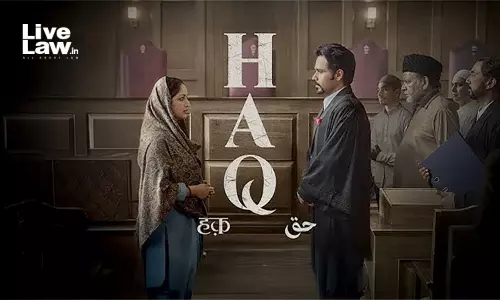
Law On Reels- Haq (2025): Faith, Feminism And The Fight For Haq
Haq (2025) is an Indian Hindi-language film directed by Suparn Varma. It features Yami Gautam Dhar (as Shazia Bano) and Emraan Hashmi (as Abbas Khan) in the lead roles. In its end credits, the film acknowledges that though the makers have taken creative liberties to fictionalize the narrative, it is predominantly inspired by the landmark Supreme Court judgment in Mohd. Ahmed Khan v. Shah Bano Begum 1985 INSC 97. This was an important decision in which Shah Bano succeeded to claimed maintenance...
Has Supreme Court's Interpretation Of S 175(4) BNSS Made Complaints Against Public Servants Harder? A Critical Analysis
The Supreme Court recently held in XXX versus State of Kerala and others that Section 175(4) BNSS is not a standalone provision and must be read with Section 175(3), requiring a complainant to first approach the police and the Superintendent of Police through a written, affidavit-supported complaint before moving the Magistrate against a public servant. While aimed at procedural discipline, the ruling raises concerns that it may unduly shield public servants and make the complaint process...

Beyond The Banner: Designing DPDPA-Compliant Consent Interfaces For E-Commerce Platforms
With the operationalisation of the Digital Personal Data Protection Act 2023 (hereinafter “DPDPA”), the digital economy of India is going to witness a drastic revamp. This revamp will pertinently change the perception of digital business as well as e-commerce operators (“operators”) as to how they collect and process data of their customers without intruding on their privacy. DPDPA will now transform e-commerce operators as to how they design their user interfaces (“UI-UX”), collect and process...
Anticipatory Bail for Proclaimed Offenders: The Evolution of Law
For a considerable period of time, the law relating to anticipatory bail in cases where an accused had been declared a proclaimed offender appeared to be settled—almost rigidly so. Courts across the country routinely dismissed applications under Section 438 CrPC once proclamation proceedings were brought to their notice. The declaration of an accused as a proclaimed offender came to be treated as a near-absolute bar to the exercise of anticipatory bail jurisdiction. The focus of judicial...

The Flaws In India's Approach To Copyright Reform For AI
Recently, the Government of India announced having constituted an eight-member committee to undertake a reassessment of the Copyright Act, 1957 in light of developments in the field of Generative Artificial Intelligence (“GenAI”) and Artificial General Intelligence (“AGI”). Meanwhile, the Department for Promotion of Industry and Internal Trade (“DPIIT”) also released a detailed working paper addressing two major policy gaps: a licensing framework for use of copyrighted material to train AI (also...
Supreme Court's Denial Of Bail Under UAPA And The Constitutional Criminalisation Of Dissent
On 5 Jan 2026, the Supreme Court of India (SC) denied bail to Umar Khalid and Sharjeel Imam, while granting bail to the other five co-accused. They were booked for the conspiracy linked to the February 2020 Delhi riots during the Citizenship Amendment Act Protests that led to 53 fatalities and widespread destruction of property. They were charged under Sections 13 and 16-18 of the Unlawful Activities (Prevention) Act, 1967, as well as multiple offences under the Indian Penal Code. The UAPA was...
New FEMA Compliance Framework for Service Exports
Currently, service exports from India (excluding software) are largely exempt from EDF/SOFTEX filings and related FEMA compliances. Service Exporters (including software) have generally been proactive in realizing proceeds because their GST refunds are strictly linked to the export realizations. If not realized, such exporters face the burden of GST and interest under Rule 96A of the...
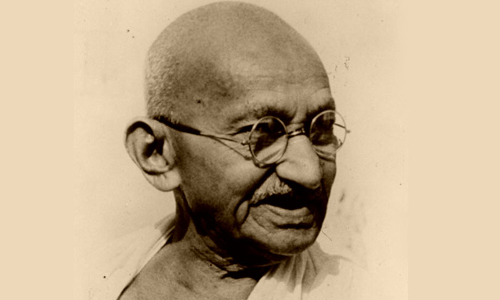
Mahatma Gandhi Assassination Case: Key Facts
On this day, 30th January, the father of our nation was murdered by Nathuram Vinayak Godse, a Hindu Mahasabhaite. Date of Assassination30th January, 1948FIR registered on30th January, 1948 at 5:17pmFIR lodged byNandlal Mehta at Tuglak Road P.S.Police submitted charge sheet27th May, 1948Number of Prosecution Witnesses149Total number of Accused personsOut of 11 accused , 3 were declared absconding.Thay are: Gangadhar Dandwati, Gangadhar Jadhav, Suradeo SharmaOffences under: Section 302, 120B, 109,...
Privy Council To Supreme Court: Continuity, Sovereignty And The Evolution Of India's Apex Court
On 26th January, India commemorates the 76th anniversary of the commencement of its Constitution. Contrary to a layman's perspective, the new Constitution did not give birth to a completely new regime, but it blew a new and independent soul into a pre-existing administrative and judicial skeleton, thereby inheriting (with necessary modifications) the system as it existed under the Government of India Act 1935 and its predecessors. Therefore, while the Constitution signified sovereignty, it also...
The Illegality Of US Strike On Venezuela
After a large-scale strike in Venezuela, US troops captured the President along with his wife, accusing them of running a 'narco terrorist organisation'. A longstanding, strained relationship between the two states cannot serve as justification for unilateral military action. This conduct of abduction of a foreign leader was unprecedented and wholly unprovoked (unlike the Panama invasion, which was in response to attacks on American military personnel in Panama) and amounts to a clear violation...

Social Media and Erosion of Legal Ethics
The legal profession has historically been regarded as a noble and disciplined calling, founded on principles of integrity, restraint, and service to justice. Advocates are officers of the court and play a vital constitutional role in the administration of justice. Their conduct, both inside and outside the courtroom, is governed by strict ethical standards framed under the Advocates Act, 1961 and the Bar Council of India Rules. However, in recent years, an alarming trend has emerged that...
Can the Marital Rape Exception Immunize a Husband Under Section 377?
A recent Madhya Pradesh High Court decision has revived a long under-examined question: can the marital rape exception under Section 375 IPC be used to defend a husband from prosecution under Section 377 for non-consensual 'unnatural' sexual acts? In M.Cr.C. No. 54650/2023, MP High Court quashed offences under Sections 376 (Rape) and 377 IPC (Unnatural Offence) against accused-husband. The FIR by wife alleged Rape, Unnatural offence, Hurt and Cruelty by husband u/s 376, 377, 323 and 498A...