


Articles
Hidden Doctrine In Gayatri Balasamy: How Supreme Court Used Implied Powers To Transform Arbitration Law
When the Supreme Court ruled on Gayatri Balasamy v. ISG Novasoft Technologies Ltd[1] it made waves, earning the title of the “modification judgment.” Most discussions centered on a key takeaway: Indian courts can now, in certain situations, modify arbitral awards rather than just nullifying them. However, if you dig a little deeper into those 61 pages, you'll uncover a more subtle yet significant shift. For the first time, the Court tapped into the Doctrine of Implied Powers to broaden the...
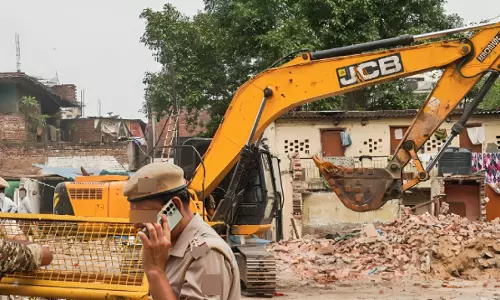
When Bulldozer Becomes The Law
The Indian Constitution was meant to protect citizens from arbitrary power; the bulldozer has come to symbolise its return. In recent years, India's skyline has changed not only through construction but through demolition, a spectacle where accusation replaces adjudication. When governments raze homes of those merely accused of crime, they bypass the courts and collapse the presumption of innocence. The bulldozer becomes a language of instant justice, its steel blade speaking louder than due...
Statutory Interpretation: Distinguishing Mandatory From Directory Provisions
In Lifestyle Equities C.V. & Anr. v. Amazon Technologies Inc., 2025 LiveLaw (SC) 974, the Supreme Court held that although Order XLI Rule 5 CPC uses the word “shall,” read with Rules 1(3) and 5(5), it does not make depositing the disputed amount mandatory for a stay of execution. These provisions are directory, giving the appellate court discretion to impose such a condition. Non-compliance may usually lead to rejection of a stay, but a stay can still be granted in “exceptional cases,” and...
Citizenship Act's Cut-off Dates: An Analysis Of Supreme Court's Balancing Act On Section 3 & Section 6A
Before discussing the legal aspects, it's essential to grasp Assam's special history and political situation. This context, unique within India, is key to understanding the issues since the state was formed on January 26, 1950. Historical Perspective Over centuries, various ethnic groups entered Assam at different points in time. The earliest ingress into Assam is attributed to the Indo-Aryans from North India, who migrated into the Brahmaputra Valley during the 3rd century A.D....
The Sanctity Of Cheque: Supreme Court Rules Cash Loan Limit Does Not Void Negotiable Instruments Act Liability
The Supreme Court of India recently delivered a judgment that conclusively resolved a long- standing interpretational issue at the intersection of commercial law and fiscal regulation, reclaiming the dignity of the cheque and clarifying the scope of liability under the Negotiable Instruments Act, 1881 (NI Act), thereby contributing to legal clarity and procedural consistency.The judgment, delivered in Sanjabij Tari v. Kishore S. Borcar, categorically determines that contravening the cash...

Fifty Years Of The Emergency: The Constitution, The Courts, And The Battle For India's Democracy
This article examines the constitutional crisis during the 1975–77 Emergency in India, focusing on judicial responses, executive overreach, and legislative subversions. It revisits key events including the Indira Gandhi v. Raj Narain verdict, the Supreme Court's controversial ruling in ADM Jabalpur, and the enactment of the 38th, 39th, and 42nd Constitutional Amendments, which sought to insulate the executive from judicial scrutiny. The article also highlights the lone dissent of Justice H.R....

Dependent Domicile: How Indian Law Still Chains Married Women To Their Husband's Identity
I. The Archaic Anchor in Private International LawIn a period where legal systems assert gender equality and women's empowerment in India's private international law, there is still a single fossilised rule lingering: the married woman's dependent domicile.Under the Indian Succession Act, 1925, a woman “by marriage acquires the domicile of her husband” and her domicile during marriage “follows the domicile of her husband,” a rule that operates irrespective of the woman's actual residence,...

Tort Of Alienation Of Affection (AoA): A Critique
Recently, the Delhi High Court ruled that a spouse can sue the partner's lover and claim compensation for interference in the marriage and causing loss of affection and companionship between the husband and wife. The third person could be treated as a disruptor causing the breakdown of the marriage. According to the court, even post Joseph Shine, adultery can still have civil consequences.The court has reignited the liability question on adultery. The question of law put to rest is being...

When High Court Appoints, High Court Extends: Clarifying Jurisdictional Anomaly Under Section 29A Of Arbitration Act
When Parliament introduced Section 29A into the Arbitration and Conciliation Act, 1996 (“Arbitration Act”) it was hailed as a reform that would make arbitration faster and more disciplined.Section 29A of the Arbitration Act mandates that an arbitral award must be passed within twelve months from the date of completion of pleadings. This period may be further extended by mutual consent of the parties for an additional six months. Once this statutory period expires, the mandate of the arbitral...
Deadly Cost Of Truth: Brutal Reality Of Journalist Killings In India
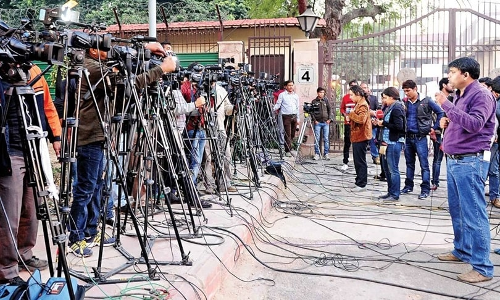
On September 28, 2025, a journalist named Rajeev Pratap's dead body was found in the Bhagirathi River, Uttarakhand. He had been missing since past ten days and he was reportedly known to be a freelancer journalist who was primarily involved in working on issues surrounding corruptions and government mis-managements. It's not the first time that a journalist has been murdered, prior to him a journalist named Mukesh Chandrashekhar was found dead, with his body stuffed in a tank, also in 2017, a...