


Articles

Recognizing Mental Health Within The Contours Of The Criminal Justice System – An Overview
Administrative apathy coupled with legal quagmires has made prison a breeding ground for human rights violations, and prisoners[1] a vulnerable population[2]. Overcrowding, custodial violence, enforced solitude, lack of privacy, inadequate health services at the prison has a negative effect on the mental health of the prisoners.[3] Rather than overcrowding the prisons with victims of poor mental health, administrative agencies ought to take initiative to allocate resources within the...

The Medical Termination of Pregnancy (Amendment) Act, 2021- Progressive But Not Far Enough
The Medical Termination of Pregnancy (Amendment) Act, 2021[1] ('Act') has come into force with effect from 24th September 2021. The Act amends the Medical Termination of Pregnancy Act 1971 ('MTP Act') which regulates the conditions under which medical termination of pregnancy be pursued. The Act inter alia modifies Section 3 of the MTP Act to extend the upper limit for medical termination of pregnancy to 24 weeks, from the present stipulation of 20 weeks, for certain categories of women...

Women In Litigation: The Other Side That No One Tells
When it is the month of June right after a long vacation at the Madras High Court, I see a rush of fresh graduates maneuvering around the Courts, and it feels overwhelming to see the cycle of new budding lawyers embellishing the Courts. However, we also begin to observe that during the course of time the women lawyers consistently disappear from the profession. By the time a decade is down, the women lawyers sustaining can literally be tallied in numbers. I could hardly count the women...
Blazing A Trail For Gender Parity In Judiciary
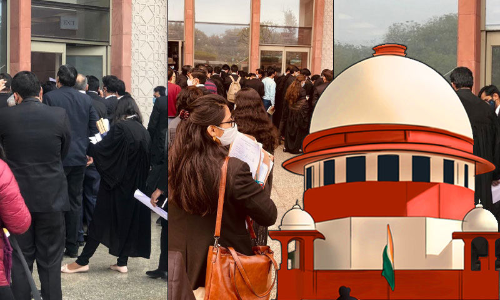
With the recent appointment of three female judges in the Supreme Court at one go, has really blazed a trail for gender parity in the bench of the Highest Court and it is a a proud moment for all of us. While felicitating the newly appointed nine Supreme Court Judges by the women lawyers of the Supreme Court of India, Justice Ramana, the Chief Justice of India, made a remarkable statement that women demand 50% reservation not as charity but as a matter ofright. Mr. Kiren Rijiju, the...

Critically Analysing India's Reasons For Not Ratifying The Convention On Freedom Of Association And Protection Of The Right To Organise
Recently, in the process of getting passed in both the houses of Parliament, the Essential Defence Services Act, 2021[1] ['the Act'] has created a lot of hue and cry pertaining to some of its provision.[2] Under the aegis of this law, the Indian government is empowered to prohibit strikes, lock-outs, and layoffs in the units enveloped in the wide spectrum of 'essential defence services' as specified in Section 2(a) of the Act; even though the primary objective of the Act is to achieve...
Whose Burden To Prove That Employee Was Not Gainfully Employed After Dismissal?Conflicting Decisions Need Settlement
Whether an employee was gainfully employed elsewhere after dismissal from a workplace is a relevant fact to determine the right of such employee to seek reinstatement and back-wages under the Industrial Disputes Act for wrongful termination of services.Whose burden is it to prove that the employee/workman was not gainfully employed after retrenchment? Whether the employer or the employee?There are conflicting judgments on this point.There are several Supreme Court judgments which hold that...
Media Reporting Of Oral Observations By Judges During Hearing
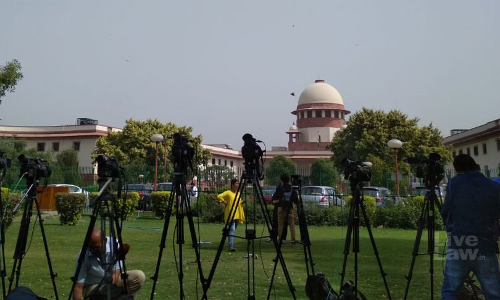
Almost three scores and eleven years ago, when 'we the people of India' adopted, enacted and gave ourselves the Constitution, 'we' had placed us at the core of the country's democratic aspirations. To give effect to the aspirations of the young nation, it was indispensable to design the pillars of democracy in ways that they can check and balance each other in furtherance of the interest of the public at large. Though the fourth pillar (the Media) remained unrecognized at the outset of...

Accelerating Progress In Improving Land Records And Services In India?
Land revenue was a major tax source for the colonial state in pre-Independence India. Updating and creating better land records through settlement operations was, therefore, a periodic activity in British times. These revisions lost much of their rationale in the post independence period as land revenue became an inconsequential tax source and legislating land reforms became a more pressing concern. The first stirrings of liberalization in the 1980s brought back a tentative focus on a...
Vacant Constitutional Posts - Whether Healthy In A Democracy?
Any Constitution, however vibrant, does not function by itself. Those responsible to make it work do so by their actions. In the same way, no constitution fails by itself. It fails only when those tasked with making it work neglect to do so.The Constitution of India is a document which 'We the people of India' adopted on 26.11.1949 and came into force on 26.1.1950. Every word in the Constitution must be given effect to and the Articles of the Constitution are not meant to be superfluous. ...

Long Covid: The Rise In Registration Of Criminal Cases For Recovery Of Money
The judiciary and the justice dispensation system has been the hardest hit due to the COVID-19 pandemic. Initially, the courts were forced to shut their doors and then quickly adapted their manner of functioning and adopted Video Conferencing to hold courts virtually. Even though it is commendable, the manner in which the Courts evolved their manner of functioning this manner of functioning was unable to take up pending suits for recovery of money that were pending before them at the...

![Panel Discussion On Constitution-Making And International Law- The UNs Role And Effect In Afghanistan Under Taliban By Council For International Relations And International Law (CIRIL)- NLSIU, Bangalore [24th October 2021]](https://www.livelaw.in/h-upload/2021/09/13/500x300_400474-kabul-protests-nyt.jpeg "Panel Discussion On Constitution-Making And International Law- The UNs Role And Effect In Afghanistan Under Taliban By Council For International Relations And International Law (CIRIL)- NLSIU, Bangalore [24th October 2021]")
Recognising Taliban Rule? : Tale of two theories in International Law
"The recurrent and inescapable reshuffle of governments and the inability to find any objective standards for recognition in the decentralized legal order of international law has led to the evolution of different doctrines by mainstream legal scholarship." The treaty of 'Peace of Westphalia' embarked the emergence of two key postulates for recognizing any government in international law, the first that "the states are sovereign political actors" and, the second which complement the...