


Articles
Judicial Review Of Speaker's Scale Of Discretionary Justice And The Defection Disqualifications: A Praxical Narration
The Supreme Court off lately has been adjudicating on defection-based disqualification petitions from different state legislative assemblies. In process, the court has reviewed the limits of speaker's discretion. The aim of this piece is to map the judicial intervention in speaker's discretion in anti-defection proceedings, and analyse the constitutional position and proprietary of the Speaker's position qua as an impartial adjudicator. For reading convenience the column is divided in the...

Discriminatory Nature Of Section 15, The Hindu Succession Act,1956
The struggle of a Hindu woman to achieve equality in matters of succession has been going on for decades with major landmarks being the Hindu Women's Rights to Property Act, 1937, The Hindu Succession Act, 1956 (hereinafter referred to as 'HSA'), and The Hindu Succession (Amendment) Act, 2005. Women in India have come a long way from not being entitled to hold property, to having life interest in the property, to finally being the absolute owner of the property and being a coparcener....

Analysing The Constitutional And Legal Sanctity Of Election Laws (Amendment) Bill, 2021
The Election Laws (Amendment) Bill, 2021 was passed hastily in the Parliament last month without adequate discussion in both houses. The amendment intends to streamline electoral rolls by removing duplicate entries and false voters from the list. However, its practical implications entail concerns around the infringement of the right to privacy of the citizens, undermining of the principle of secret ballots and further disenfranchisement of the voters, as evidenced from the experience in ...
Not Adding Interest To The Principal To Arrive At Threshold Of Rs.1 Crore ; A Critique On CBRE V. United Concepts Decision
In CBRE V. South Asia Private Ltd v. M/s. United Concepts and Solutions Private Limited ("CBRE"), the Principal Bench of the National Company Law Tribunal ("NCLT") recently took a view that "the Interest amount cannot be clubbed with the Principal amount of debt to arrive at the minimum threshold of Rs.1 Crore for complying with the provision of Section 4 of IBC, 2016." In the said case, the operational creditor, CBRE had initiated Corporate Insolvency Resolution Proceedings ("CIRP") under...
Quantifiable Data On Reservation In Promotions
The recent judgement of the Supreme Court in Jarnail Singh v. Lachhmi Narain Gupta, Civil Appeal No. 629 of 2022 ("Jarnail Singh II") has once again turned the spotlight on one of the most emotive and volatile issues in India, that is, reservation for Scheduled Castes ("SCs") and Scheduled Tribes ("STs"). The case reached the Supreme Court on account of multiple High Courts striking down the policies of reservation in promotions for Scheduled Castes and Scheduled Tribes ("SCs and STs")...
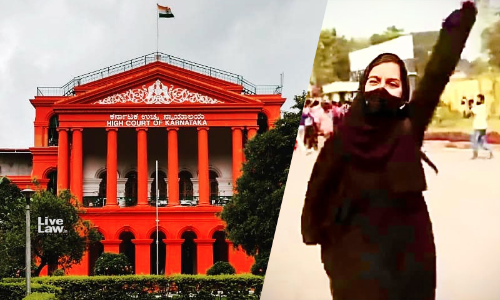
The Essential Religious Practices Test And The Inversion Of Agency: Notes From The Hijab Hearing
The essential religious practices test ["ERP"] is one of the enduring burdens of Indian constitutional law. Its origins (as I have shown here) lie in a judicial misreading of one sentence spoken by Dr. Ambedkar in the Constituent Assembly Debates. Scholars have criticised it. Judges have expressed discomfort about how it forces them into becoming ecclesiastical authorities (often for religions that are not even their own). And yet, every time a faith-based dispute is brought to the courts, the...

Censorship By Sealed Cover: The Kerala High Court's MediaOne "Judgment"
When a single judge bench of the High Court of Kerala reserved its judgment on the question of the central government banning the MediaOne news channel, one awaited a reasoned order that would subject the executive action in question to rigorous judicial scrutiny. As banning a TV channel strikes at the core of the right to freedom of speech and expression, one expected that the self-proclaimed "sentinel on the qui vive" would examine the impugned executive action on the touchstone of the...

Amazon V. CCI: Analysis Of Whether Res Judicata Stays Applicable On Orders Passed By CCI
The Karnataka High Court ('HC') dismissed writ petitions brought by Flipkart Internet Pvt. Ltd. ('Flipkart') and Amazon Sellers Services Pvt. Ltd. ('Amazon') (collectively "Opposing Parties") contesting the Competition Commission of India ('CCI') order made under Section 26 (1) of the Competition Act, 2002 ("Act"). This case dealt with the notion of res judicata and its applicability to CCI rulings. The doctrine of res judicata is a global legal principle which states that if the matter...

Veiling Of Opportunities: The Case Against The Karnataka Hijab Ban
In 2017, the Supreme Court, almost prophetic of the times to come, in the K S Puttaswamy Vs.UOI (2017) 10 SCC 1 cautioned that nobody would want to be told by the state as to what they should eat and what they should wear. As far back as 1949, at the time of the debates of the Constituent assembly, a proposal was made in relation to the freedom of religion. It was proposed by a barrister from Bihar, Tajamul Hussain, that the words,`No person shall have any visible sign or mark or name,...